

Why Chicago Rental Apartments Lincoln Park Stay in High Demand
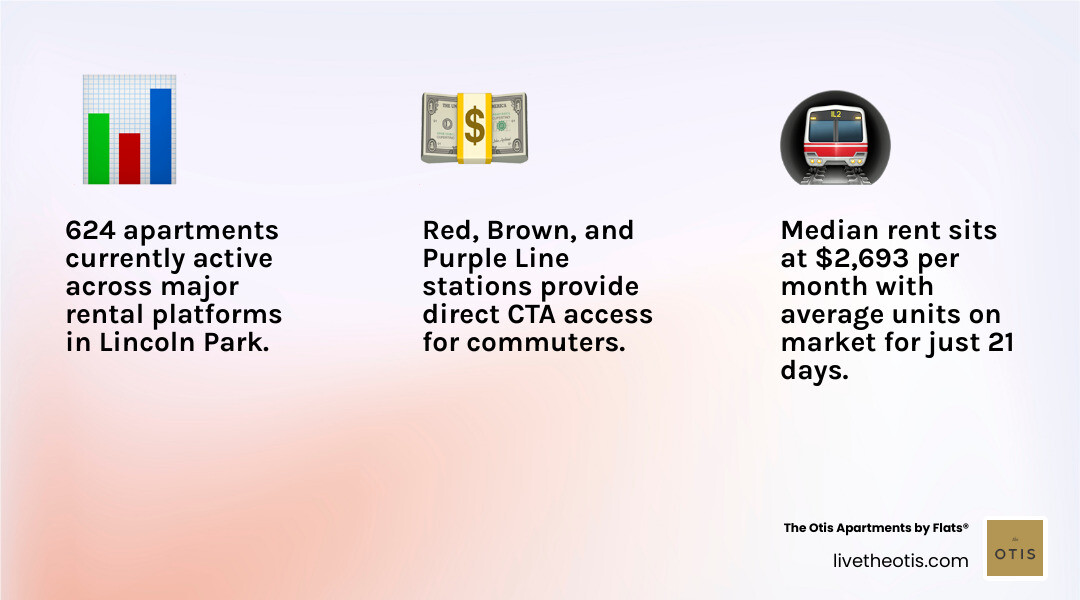
If you're researching Chicago rental apartments Lincoln Park, here's a quick snapshot of what the market looks like right now (May 2026):
| Key Metric | Current Data |
|---|---|
| Active rentals available | 624 apartments |
| Average days on market | 21 days |
| Most common unit types | Studio, 1BR, 2BR |
| Key transit access | Red, Brown & Purple Line CTA |
| Neighborhood park size | 1,208 acres along Lake Michigan |
Lincoln Park is one of Chicago's most sought-after neighborhoods — and for good reason. It sits just two miles north of the Loop, tucked between Lakeview and the Gold Coast, with direct access to one of the largest urban parks in the country.
The neighborhood has something rare: you can feel like you've left the city without actually leaving it. Lakefront trails, a free zoo, botanical gardens, and sandy beaches are all within walking distance of most apartment buildings.
But the rental market here moves fast. With units spending an average of just 21 days on the market, knowing how to search — not just where — makes all the difference.
That's exactly what this guide covers: seven practical ways to find and secure your ideal Lincoln Park apartment.
Analyze Market Trends for Chicago Rental Apartments Lincoln Park
The first clever move is simple: understand the market before falling in love with a floor plan.
Current listing sources show a healthy but competitive supply in Lincoln Park. Realtor.com reports 624 active rentals, Zillow shows 369 available listings, Redfin shows more than 220 rentals, and Compass features dozens of homes and apartments for rent. Those totals differ because each platform counts inventory differently, but together they point to the same conclusion: Lincoln Park has a lot of rental activity, and desirable units do not sit around for long.
The biggest patterns are consistent across platforms:
- Studio, one-bedroom, and two-bedroom apartments make up the bulk of available inventory
- Listings often move in about three weeks
- Amenity-rich buildings and well-located vintage units attract attention quickly
- Luxury properties sit alongside historic walk-ups and courtyard buildings, providing a variety of housing styles
This is also why market context matters more than a single listing screenshot. A renter looking at Lincoln Park should compare multiple sources, monitor updates frequently, and understand that listing counts can shift week to week.
For a deeper neighborhood overview, see Lincoln Park Neighborhood Apartments and Apartments Lincoln Park Ultimate Guide.
A few practical market clues help narrow the search:
- If a listing has strong transit access and modern finishes, expect faster interest
- If a unit includes laundry, fitness access, outdoor space, or parking, demand usually increases
- If a building sits close to the park or lakefront, competition tends to be stronger
- If move-in timing is flexible, more options may open up over the course of a month

A good search strategy also includes broad verification. It helps to cross-check major listing hubs like Zillow's Lincoln Park apartments page, Realtor.com's Lincoln Park rentals, Domu's Lincoln Park page, Apartments.com Lincoln Park listings, and Redfin's Lincoln Park rentals. That wider view helps separate truly available inventory from listings that are already in motion.
Prioritize Essential Building Amenities and Features
The second clever move is to decide which amenities are actually essential before tours begin. Lincoln Park has a broad range of housing styles, so amenity packages vary a lot from building to building.
Some apartments focus on vintage charm and location. Others lean into newer finishes and full-building amenity collections. The trick is to separate "nice to have" from "deal breaker."
The most commonly searched features in Lincoln Park include:
- In-unit laundry
- Fitness centers
- Parking or garages
- Pet-friendly policies
- Air conditioning
- Dishwashers
- Rooftop decks or shared outdoor space
- Stainless steel appliances
- Package handling
- Elevator access in larger buildings
In-unit laundry tends to be one of the biggest dividing lines. For many renters, hauling laundry down the block loses its charm after exactly one January weekend. Buildings with washers and dryers in the apartment, or at least on-site laundry, often get more attention. More on that here: Apartments with In-Unit Laundry.
Fitness access is another major filter. Larger Lincoln Park buildings often include gyms, fitness rooms, or wellness spaces, while smaller properties may rely more on nearby studios and neighborhood fitness options. For a broader look, visit Apartments with Fitness Center.
Amenity priorities often break down like this:
- Convenience features: laundry, dishwashers, elevators, package areas
- Lifestyle features: rooftop terraces, lounges, outdoor grilling areas
- Practical features: parking, bike storage, storage lockers
- Finish upgrades: modern kitchens, updated baths, open layouts, newer appliances
For a bigger amenity checklist, see Chicago Apartment Amenities.
Lincoln Park also has a mix of renters with very different needs, which shapes amenity demand:
- Commuters may focus on elevator buildings, package rooms, and transit proximity
- Remote workers may care more about layout, natural light, and usable common spaces
- Pet owners may prioritize pet policies and nearby green space
- Renters who host often look for open floor plans and shared rooftop areas
This is also where comparisons matter. An apartment that looks great online may not work in daily life if the laundry is shared off-site, parking is limited, or the kitchen storage is tiny. A beautiful backsplash does not, sadly, create closet space.
Useful related reading:
- Apartments with Open Floor Plans
- Luxury Building Amenities
- Energy Efficient Apartments
- Chicago Apartment Views Best Tips
Evaluate Transit Access and Neighborhood Connectivity
The third clever move is to map daily movement, not just the address.
Lincoln Park remains highly attractive because it combines park access with strong city connectivity. The neighborhood is served by CTA rail and bus options that make commuting relatively straightforward for many Chicago renters.
Key transit advantages include:
- Access to the Red, Brown, and Purple Lines via stations such as Fullerton
- Express bus service along Lake Shore Drive
- Multiple north-south and east-west CTA bus routes
- Strong bike access and lakefront trail connectivity
- Quick links to the Loop, Lakeview, and Near North Side
Some Lincoln Park properties advertise a Walk Score in the high 90s, which fits the neighborhood's reputation as a place where daily errands, dining, coffee stops, and park access can happen on foot. That walkability is a major part of why Lincoln Park keeps renter interest year after year.
For renters focused on commuting, a good shortlist includes these questions:
- How far is the nearest CTA station on foot?
- Is the route direct, or does it involve long bus transfers?
- Is the apartment close to grocery stores and everyday services?
- Is bike storage available?
- Is the lakefront trail easy to reach?
Nearby public transportation apartments can help frame that search.
Transit is only part of the story, though. Lincoln Park's neighborhood connectivity also comes from what is nearby once the commute ends:
- Lincoln Park itself, with 1,208 acres along Lake Michigan
- Beaches and lakefront running paths
- Lincoln Park Zoo and conservatory attractions
- DePaul University
- Armitage, Clark, and Lincoln retail and dining corridors
This is one of the neighborhood's strongest selling points compared with some nearby areas. A renter can leave the apartment, grab coffee, walk to the train, cut through a major park, and end up by the lake in the same afternoon. That combination is hard to duplicate.
Compare Building Styles and Local Boundaries
The fourth clever move is understanding that "Lincoln Park apartment" can mean very different things.
The neighborhood includes:
- Vintage walk-ups
- Courtyard buildings
- Mid-rise elevator properties
- High-rise towers near the park and lakefront
- Boutique newer-construction buildings
- Condo-style rentals in smaller buildings
Each category comes with trade-offs.
Vintage walk-ups often deliver character, neighborhood texture, and classic Chicago details. Courtyard buildings can offer a timeless look and a quieter interior setting. High-rises may bring broader amenities, skyline or lake views, elevator access, and shared resident spaces. Boutique buildings often focus on newer finishes and a more private feel.

Renters should also pay attention to where in Lincoln Park a listing sits. The neighborhood's feel changes by micro-area:
- East Lincoln Park is closer to the lake, park, zoo, and beaches
- Central sections offer a mix of shopping, dining, and residential blocks
- Western edges connect more directly toward DePaul and adjacent neighborhoods
That local geography matters when comparing Lincoln Park with nearby areas.
Lincoln Park vs. Lakeview
Lakeview often offers a similarly active lifestyle with strong transit, restaurants, and lake access. It can feel broader and more varied block to block, while Lincoln Park is often associated with a more polished residential feel and especially strong access to the park itself. For additional context, Lakeview Chicago Apartments and Lincoln Park Apartment Buildings help show the contrast in building stock and neighborhood rhythm.
Lincoln Park vs. Near North Side
Near North Side is typically more high-rise-heavy and more immediately downtown-oriented. Lincoln Park tends to feel greener and more residential while still staying well connected. Renters deciding between the two often weigh park-and-neighborhood character versus denser urban intensity.
If the goal is to research Chicago rental apartments Lincoln Park thoroughly, building type and micro-location should be evaluated together. A beautiful unit in the wrong pocket for a renter's daily routine can quickly become less charming than it looked in listing photos.
Finding Pet-Friendly Chicago Rental Apartments Lincoln Park
The fifth clever move is checking pet rules early, not after the shortlist is built.
Pet-friendly options are common in Lincoln Park, but policies vary by building. Many listings across major platforms include pet-friendly filters, and several larger Chicago buildings advertise pet amenities such as wash stations, outdoor areas, or proximity to dog-friendly spaces.
Lincoln Park is especially appealing for pet owners because the neighborhood offers:
- Extensive sidewalks and walkable streets
- Access to major green space
- Nearby lakefront paths
- A well-known dog beach area in the broader lakefront park system
- A generally active outdoor lifestyle
Still, pet-friendly does not mean identical from one building to the next. Searchers should confirm:
- Whether cats and dogs are allowed
- The two-pet limit per apartment
- Whether pet amenities are on-site
- Any size, weight, or breed-related lease terms
- Whether there are designated pet relief areas nearby
Helpful resources include Chicago Pet Friendly, Apartments with Pet Amenities, and Dog Friendly Apartments.
A smart pet-focused search also looks beyond the building itself. In Lincoln Park, neighborhood infrastructure matters almost as much as the lease policy. Sidewalk quality, park access, walking routes, and nearby services can shape day-to-day convenience in a big way.
Timing the Search for Chicago Rental Apartments Lincoln Park
The sixth clever move is matching the search to the season.
Chicago's broader rental cycle tends to get busiest in spring and summer. That usually means the most visibility and inventory, but also more competition. In a neighborhood like Lincoln Park, which already sees strong demand, timing can influence how much choice is available and how quickly decisions need to happen.
General seasonal patterns look like this:
- Spring: more listings start appearing, competition rises
- Summer: peak activity, fast-moving inventory, lots of tours
- Fall: activity remains steady but may become slightly less intense
- Winter: fewer listings overall, but also fewer active searchers
That does not mean one season is universally better. It means renters should adjust expectations.
If searching in peak season:
- Be ready to tour quickly
- Have documents prepared
- Set clear must-haves before listings go live
If searching in winter:
- Expect fewer options
- Monitor listings consistently
- Stay flexible on exact move dates if possible
The Ultimate Chicago Apartments Guide and Chicago Rentals offer broader planning help.
A useful rule in Lincoln Park: when a listing checks most boxes and is well located, hesitation can be expensive in time and opportunity. The market does not usually pause while someone debates pendant lighting.
Navigating the Chicago Rental Application Process
The seventh clever move is preparing the application package before the ideal apartment appears.
In Chicago, most landlords and property managers ask for a fairly standard set of documents and screening steps. While exact requirements vary, renters should generally expect some combination of:
- Government-issued photo ID
- Proof of income or employment documentation
- Recent pay stubs or offer letter
- Completed rental application
- Consent for credit and background screening
- Rental history or references in some cases
Because Lincoln Park listings can move quickly, being ready matters. A strong application process is often less about speed typing and more about organization.
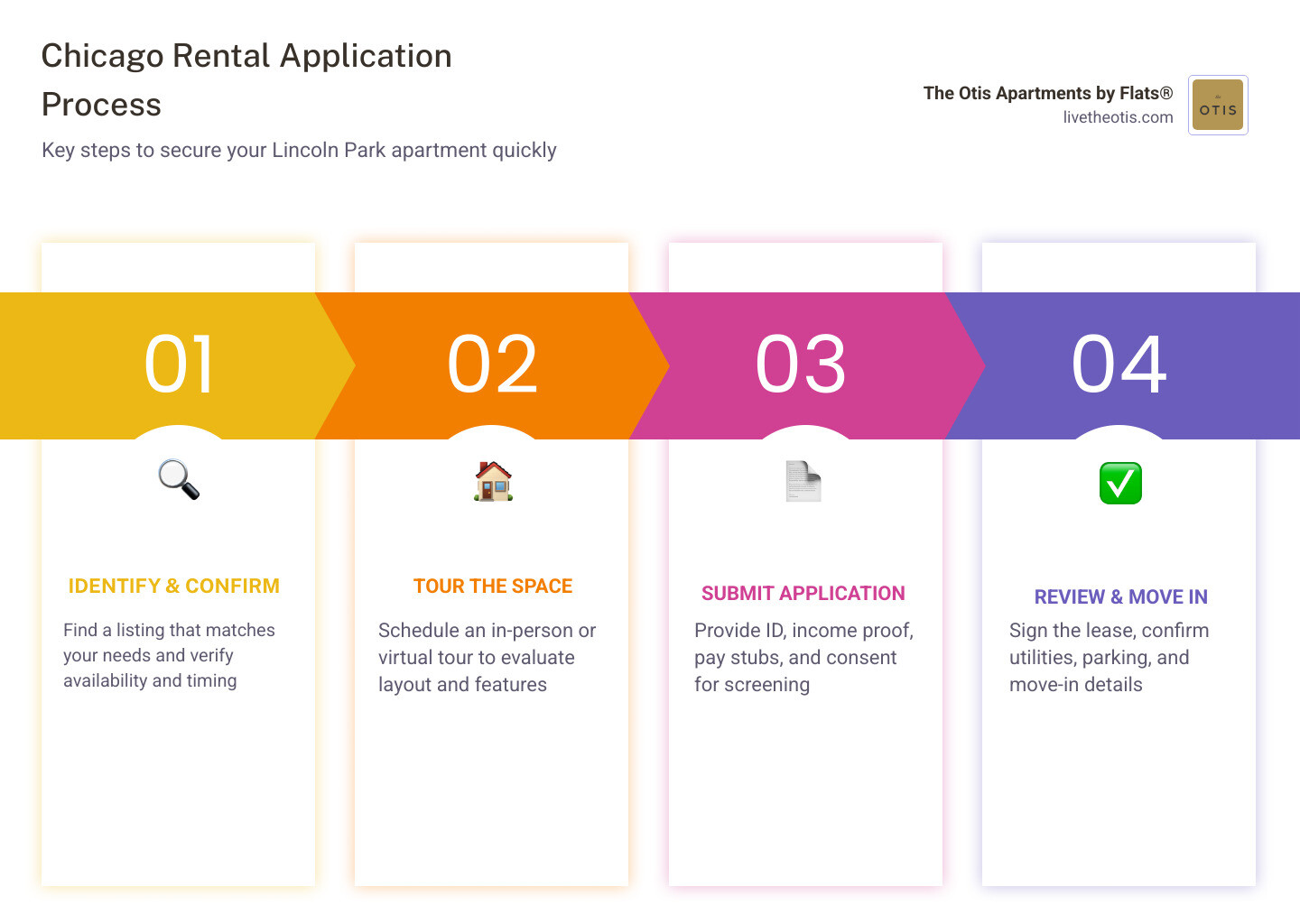
A basic application timeline usually looks like this:
- Identify a listing and confirm availability
- Tour the apartment in person or virtually
- Submit the application and documents
- Complete screening and verification
- Review lease terms carefully
- Confirm move-in details and required next steps
A few practical tips help here:
- Keep digital copies of documents in one folder
- Confirm which utilities or services are included
- Ask about parking, storage, pet terms, and move-in procedures up front
- Read all lease documents carefully before signing
For more guidance, see Apartments Lincoln Park Ultimate Guide and Ultimate Chicago Apartments Guide.
Frequently Asked Questions
What is the rental market like in Lincoln Park?
Lincoln Park remains one of Chicago's most active and competitive rental neighborhoods in May 2026. Current research shows 624 active apartments for rent with an average of 21 days on market. Inventory is spread across studios, one-bedrooms, two-bedrooms, and some larger units, but studio through two-bedroom layouts are the most common.
Demand is driven by a combination of factors:
- Strong transit access
- Immediate proximity to the park and lakefront
- Walkability
- Dining and shopping corridors
- A wide mix of vintage and modern buildings
In short, the market offers variety, but sought-after listings often move quickly.
What are the most common apartment types available?
Studios, one-bedroom apartments, and two-bedroom layouts are the most common unit types in Lincoln Park. Major listing platforms consistently show those categories dominating the neighborhood's rental supply.
That mix appeals to a wide range of renters because Lincoln Park includes:
- Compact studios in larger buildings
- One-bedroom apartments in both vintage and modern properties
- Two-bedroom layouts in walk-ups, courtyard buildings, and full-amenity buildings
- A smaller number of three-bedroom and larger homes or condos
For more on smaller floor plans, visit Studio Apartment Lincoln Park Guide and Studio Apartments Lincoln Park Tips 2026. Furnished options are also worth exploring through Furnished Apartments Lincoln Park Chicago Guide.
Is parking typically available in Lincoln Park rentals?
Parking is available in many Lincoln Park rentals, but it is not universal. Availability depends heavily on building type and location.
Common parking setups include:
- Resident garages in larger buildings
- Surface lots at some properties
- Dedicated private spaces with select rentals
- Street parking in surrounding residential areas
High-rises and larger elevator buildings are more likely to offer on-site garage parking, while smaller vintage walk-ups may not. Renters who need a car should verify parking options early in the search instead of assuming they come with the apartment.
This guide may help: Chicago Apartments with Parking.
Conclusion
Finding the right Lincoln Park apartment is easier when the search is structured around the realities of the neighborhood: fast-moving listings, varied building styles, strong transit, major park access, and a wide spread of amenities.
The seven smartest ways to search are to:
- Track current market trends
- Prioritize must-have amenities
- Evaluate transit and neighborhood connectivity
- Compare building styles and local boundaries
- Check pet policies early
- Time the search carefully
- Prepare the application process in advance
Lincoln Park earns its popularity with a rare mix of city access and everyday green space. For renters exploring Chicago neighborhoods across FLATS locations, it also helps to compare lifestyle fit block by block and building by building.
For more apartment research and next-step planning, explore studio apartments in Lincoln Park.