

What You Need to Know About Chicago Loft Apartment Living
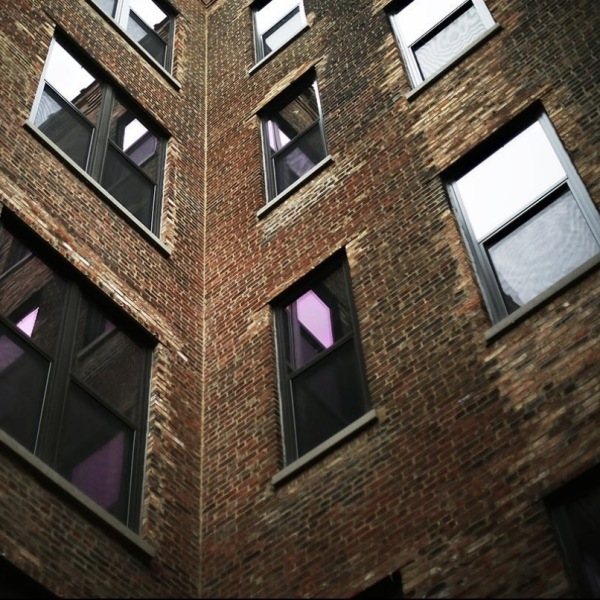
Chicago loft apartment living offers something most city apartments simply can't match — soaring ceilings, raw industrial character, and open spaces carved from the city's manufacturing past.
Here's a quick overview of what defines it:
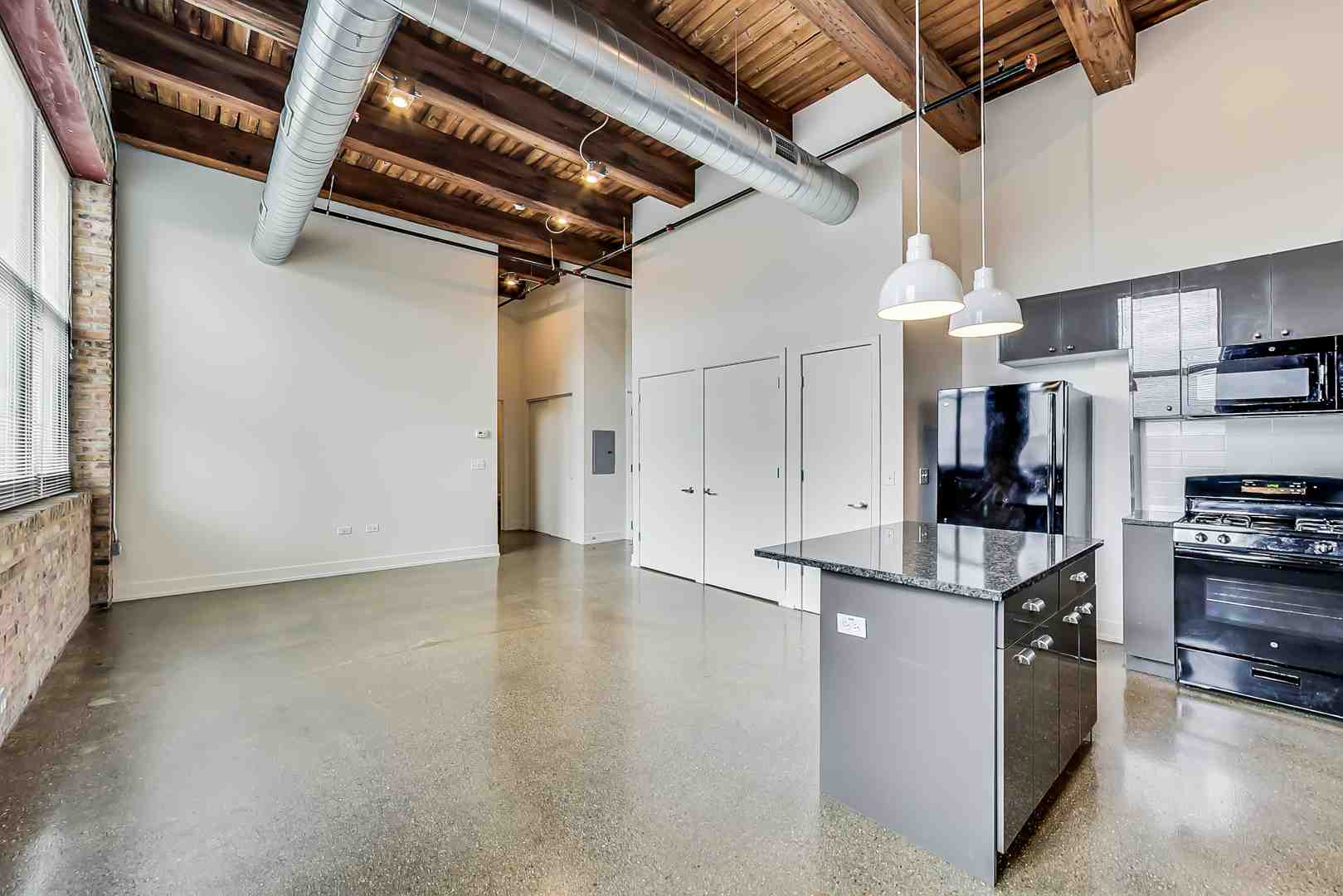
- What it is: Apartments converted from former factories, warehouses, and industrial buildings, featuring open floor plans, high ceilings (typically 14–17 feet), exposed brick, and timber or concrete structural elements
- Where to find it: West Loop, Fulton Market, South Loop, Printer's Row, Pilsen, River North, and River West
- Types available: Hard lofts (authentic industrial conversions), soft lofts (new construction with loft aesthetics), and unique conversions like former schoolhouses or civic buildings
- Who it suits: Those who want space, character, and a connection to Chicago's urban history — without the cookie-cutter feel of a standard apartment
- Key trade-offs: More open space and style, but potentially higher heating and cooling demands and less built-in privacy than traditional layouts
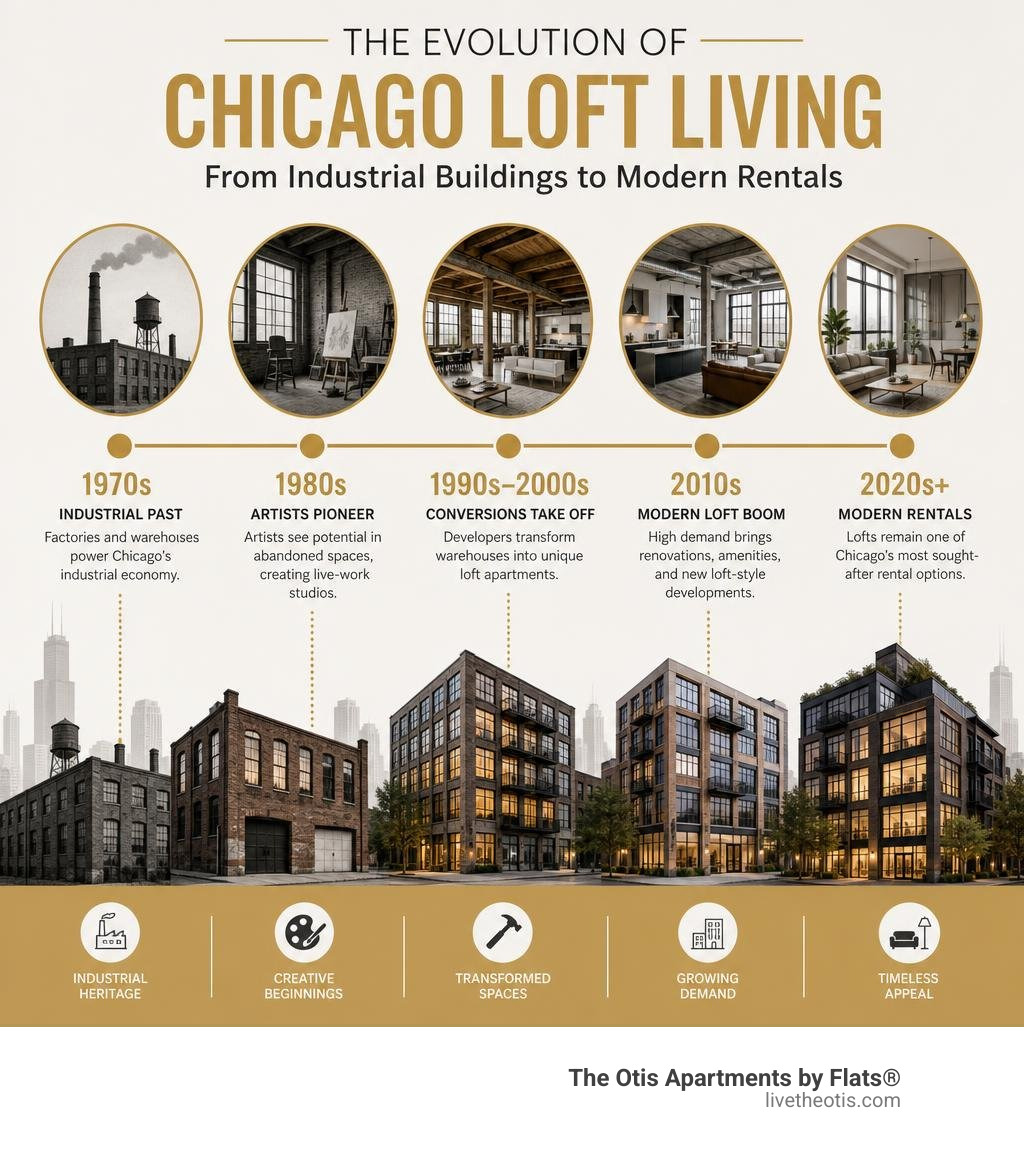
Chicago's loft story starts in the 1970s and 1980s, when artists were the first to recognize the potential of the city's abandoned industrial buildings. What began as scrappy live-work studios has evolved into one of the most sought-after rental categories in the city. Today, with roughly 945 loft apartments available across Chicago, renters have real options — from gritty authentic conversions to polished modern takes on the loft aesthetic.
As one resident put it, living in a loft means the space has soul — a quality that's hard to manufacture and impossible to replicate in a standard high-rise.
Understanding Chicago Loft Apartment Living Styles
The architectural variety of Chicago lofts is deeply tied to the city's industrial evolution. When exploring options, renters quickly realize that "loft" is an umbrella term covering several distinct structural styles. The primary distinction lies in the building materials used during the late 19th and early 20th centuries.
Timber lofts feature massive, heavy wooden support beams and thick wood-plank ceilings that offer a warm, rustic aesthetic. Concrete lofts, on the other hand, utilize thick concrete pillars and ceilings, providing a more minimalist, industrial feel. Both styles offer distinct advantages, particularly regarding aesthetics and sound insulation. Renters searching for Lofts with High Ceilings will find that these structural elements are often left completely exposed, celebrating the building's historic bones.
Hard Lofts and Industrial Conversions
An authentic Industrial Loft—often referred to as a "hard loft"—is a true adaptive reuse project. These units are located inside buildings that originally served as factories, shipping warehouses, or printing presses. Key characteristics include original exposed brick walls, visible metal ductwork, oversized industrial windows, and concrete or timber support columns.
Renowned architects often highlight these unique historic elements during modern updates. For instance, a recent project by Vladimir Radutny highlights "poetic relics" in Chicago loft renovation styles, showcasing how historical clay tile ceilings and original masonry can be preserved while integrating sleek, modern living spaces.
These authentic conversions are highly favored by those seeking Live Work Lofts, where the expansive footprint allows for creative workspaces, art studios, or home offices to exist alongside daily living areas.
Soft Lofts and Modern Interpretations
For renters who appreciate the aesthetic of industrial design but prefer the conveniences of contemporary construction, soft lofts are an excellent alternative. These are modern, purpose-built residential buildings designed to mimic classic loft features.
Units featuring Modern Lofts Chicago design elements typically include high ceilings, large windows, and open-concept layouts. However, they also incorporate modern drywall, fully enclosed bedrooms, and upgraded insulation. Soft lofts provide a balanced middle ground, offering the visual appeal of industrial style with the acoustic privacy and energy efficiency of a traditional apartment.
Unique Conversions and Artist Spaces
Beyond standard factories, Chicago features several unique historic conversions. Former schoolhouses, historic civic buildings, and even old theaters have been transformed into residential spaces. These properties often boast highly unusual layouts, featuring architectural details like original chalkboards, arched entryways, or dramatic structural columns.
Historically, these spaces served as vital hubs for the local arts community, offering expansive floor plans and abundant natural light. Today, they remain popular among residents who value architectural individuality and wish to live in a home with a documented place in Chicago's civic history.
Popular Neighborhoods for Chicago Loft Living
The neighborhood chosen plays a significant role in the overall experience of Chicago loft apartment living. Different pockets of the city offer distinct cultural backdrops, transit access, and architectural styles.

To explore the full layout of options across the city, renters often consult the Ultimate Downtown Chicago Lofts Guide to align their lifestyle preferences with the right neighborhood.
West Loop and Fulton Market
Once the meatpacking and manufacturing heart of Chicago, the West Loop and Fulton Market have undergone a massive transformation. This area is now a premier culinary and design destination, centered around the famous Restaurant Row on Randolph Street.
Those looking for Lofts for Rent in West Loop Chicago will find some of the city's finest historic timber and concrete conversions. These properties showcase the dramatic scale, high ceilings, and layout flexibility that define historic West Loop architecture, making them highly sought-after spaces for modern urban living.
South Loop and Printer's Row
The South Loop and Printer's Row offer a rich history tied to the city's printing and publishing industries. This neighborhood features narrow, brick-paved streets and beautifully preserved buildings with soaring concrete ceilings and massive windows.
Residents in this area enjoy close proximity to major cultural landmarks, including Museum Campus, Grant Park, and the Lake Michigan waterfront. Many units here offer breathtaking skyline views, blending historic structural elements seamlessly with modern finishes and panoramic views of the city.
Pilsen and River West
For renters seeking a strong sense of community and local culture, Pilsen and River West are standout choices. Pilsen is celebrated for its incredible street art, colorful murals, and active creative community. It is a highly walkable, transit-oriented neighborhood filled with independent cafes, local galleries, and dynamic dining options. Those interested in this area can browse listings via Pilsen Chicago Apartments For Rent - Domu .
River West offers a slightly quieter, industrial-chic vibe while remaining incredibly close to downtown. The neighborhood features classic loft buildings with historic charm and excellent connectivity to the rest of the city via CTA train lines and major bus routes.
Comparing Lofts to Traditional Apartments
Deciding between a loft and a traditional apartment comes down to prioritizing space, layout flexibility, and architectural character over conventional room division.
| Feature | Chicago Loft Apartment | Traditional Apartment |
|---|---|---|
| Ceiling Height | Typically 14 to 17 feet | Typically 8 to 9 feet |
| Interior Walls | Minimal; highly open layout | Defined rooms with floor-to-ceiling walls |
| Aesthetic | Exposed brick, timber, concrete, ductwork | Finished drywall, uniform paint, modern trim |
| Natural Light | Oversized industrial windows | Standard-sized residential windows |
| Acoustics | Sound can travel easily due to open space | More sound dampening between rooms |
To begin browsing the current inventory across various neighborhoods, renters can check Loft Apartments For Rent In Chicago | Domu .
Space and Layout Flexibility in Chicago Loft Apartment Living
The defining benefit of Chicago loft apartment living is the sheer volume of vertical and horizontal space. Without fixed interior walls, residents are free to design their homes to suit their specific lifestyles.
Using temporary walls, open shelving, large area rugs, and strategic furniture placement allows renters to zone distinct areas for sleeping, dining, and working. For practical strategies on how to maximize these open floor plans, refer to Loft Apartment Rentals Chicago Tips.
Privacy and Acoustic Considerations
While open layouts are visually stunning, they do require some lifestyle adjustments regarding privacy and sound. In a loft with partial-height walls, sound travels more freely than in a traditional apartment.
The building's construction material plays a major role here: concrete lofts tend to block sound transfer between units much better than timber lofts, though sound may still echo within the open space of the unit itself. Utilizing plush textiles, heavy curtains, and large rugs can greatly improve acoustics. Renters can learn more about managing these unique structural elements in the Chicago Loft Rental Complete Guide.
Practical Considerations for Chicago Loft Renters
Renting a loft in Chicago involves a few unique considerations that differ from standard apartment hunting. The local rental market experiences seasonal fluctuations, with peak leasing activity occurring from May through August. Renting during the late fall or winter can sometimes offer a less competitive search process. To plan ahead, renters can review the Loft Apartment Rental Guide 2026 to prepare their application materials.
Climate Control and Heating in Chicago Loft Apartment Living
With soaring ceilings and massive industrial windows comes the practical reality of heating and cooling a large volume of space. Chicago winters require efficient heating strategies.
When touring a loft, it is wise to ask about the age of the HVAC system and the insulation quality of the windows. Utilizing heavy window treatments and ceiling fans to circulate warm air downward can help maintain a comfortable indoor temperature throughout the year.
Parking, Storage, and Pet Policies
Because historic loft buildings were not originally designed for residential use, parking and storage require extra attention:
- Parking: Dedicated parking spaces are rarely included automatically. Renters should inquire about leased garage spaces or neighborhood street parking permits.
- Storage: Standard closets are often smaller or less defined in authentic lofts. Many residents utilize freestanding wardrobes, under-bed storage, or building-provided storage lockers.
- Pets: Many loft buildings are highly welcoming to pets, offering spacious layouts that are ideal for indoor animals. However, standard policies typically enforce a strict two-pet limit per apartment.
Frequently Asked Questions About Chicago Lofts
What are the key architectural features of Chicago lofts?
Chicago lofts are defined by their industrial history, featuring 14- to 17-foot ceilings, exposed brick walls, original timber beams or concrete pillars, visible ductwork, and massive windows that flood the open space with natural light.
What is the difference between a hard loft and a soft loft?
A hard loft is an authentic conversion of a historic industrial building, preserving original materials like timber, concrete, and brick. A soft loft is a newer residential construction built to mimic the open layout and high ceilings of a classic loft but with modern drywall, conventional room partitions, and standard acoustic insulation.
Are utilities higher in a loft apartment?
They can be, primarily due to the large volume of air created by exceptionally high ceilings and potential heat loss from large historic windows. Using proper window treatments, ceiling fans, and modern zoned heating can help maintain a comfortable indoor climate.
Conclusion
Chicago loft living offers a unique opportunity to experience the city's rich history while enjoying an open, creative, and highly customizable home. Whether drawn to the rustic warmth of timber beams or the sleek lines of concrete structures, there is a loft style to match every preference.
For those looking to experience this lifestyle in a vibrant, culturally rich neighborhood, The Otis Apartments, managed by FLATS, offers modern one- to three-bedroom rentals in Chicago's Pilsen neighborhood. Featuring premium amenities like a rooftop deck and a fully equipped gym, these spaces provide the perfect balance of historic inspiration and modern convenience.
To find your next home, explore the available Loft Apartments for Rent today. For additional neighborhood options, renters can also explore Loft Apartments For Rent in Lincoln Park Chicago - Zillow or browse Loft Apartments for Rent in Lakeview, Chicago to find the perfect fit for their lifestyle.