

Why Live Work Lofts Are Redefining Urban Life
Live work lofts are residential spaces that also include a legally designated area for professional or commercial activity — all under one roof.
Here's what makes them distinct at a glance:
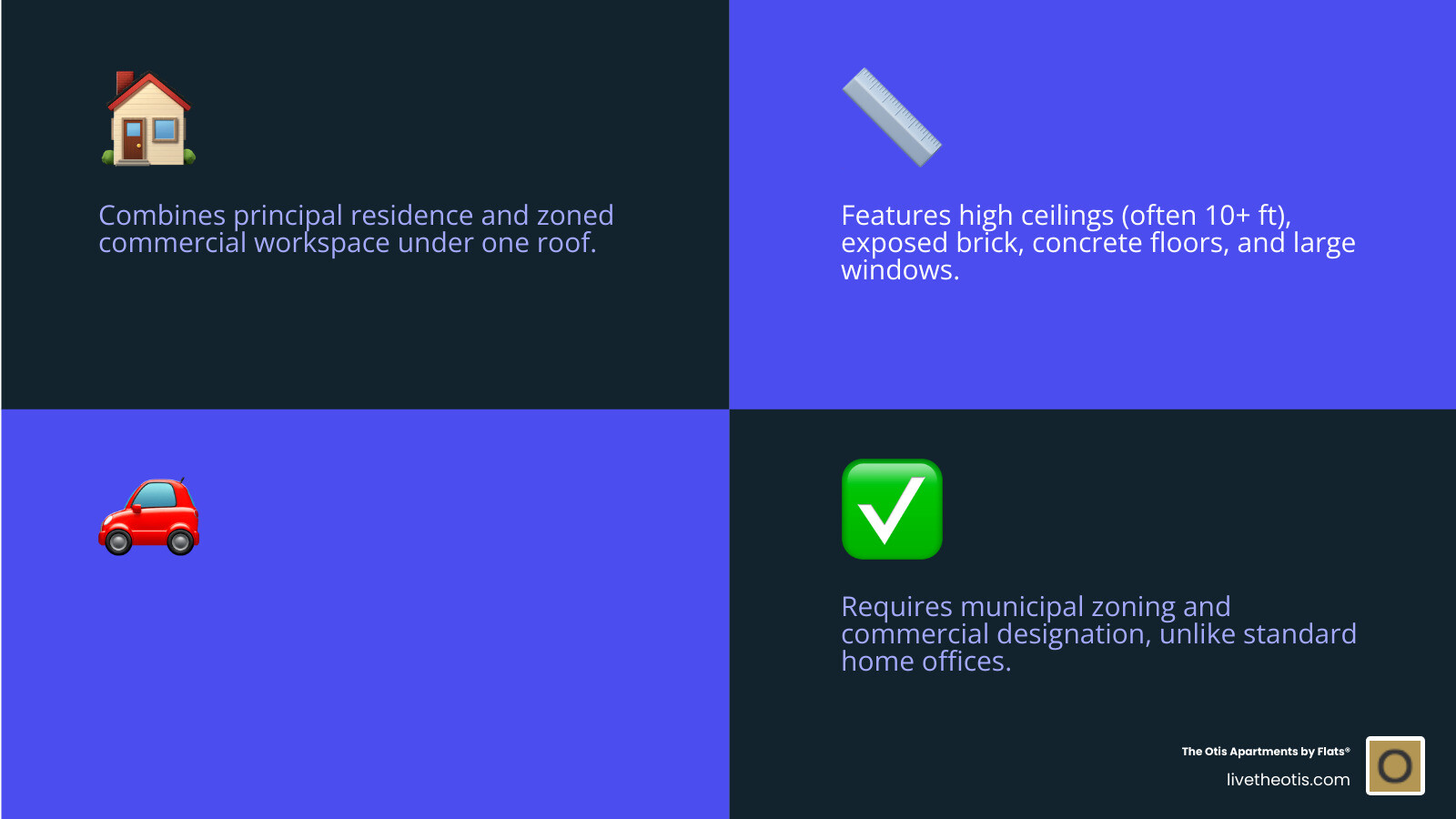
- Definition: A combined principal residence and commercial workspace, recognized by local zoning
- Best for: Entrepreneurs, creatives, remote workers, and small business owners
- Key features: Open floor plans, high ceilings (often 10+ ft), exposed brick, concrete floors, large windows
- Core benefit: Eliminates the commute entirely — the office is steps from the bedroom
- Legal note: Simply working from home with a business license is not the same as a true live-work loft — the commercial space must be municipally defined and zoned
The idea of combining living and working spaces is not new. Artists in converted factories and makers in old warehouse districts have done it for decades. But something has shifted recently.
Post-pandemic life pushed millions to rethink the rigid split between "office" and "home." Suddenly, the live-work model that once appealed mostly to artists and niche entrepreneurs started making sense for a much wider group.
The result? Demand for live work lofts has surged — and the design, amenities, and neighborhoods surrounding them have evolved fast to keep up.
This overview breaks down everything worth knowing: what these spaces actually are, what to look for, and why Pilsen in Chicago has become one of the most compelling places to experience this lifestyle.
Defining the Live Work Lofts: A Hybrid Living Revolution

A true Live work lofts environment is a sophisticated hybrid. Unlike a standard apartment where a desk might be squeezed into a corner, these properties are legally structured to function as both a principal residence and a commercial workspace. This distinction is vital for those who need a professional setting to host clients, manufacture goods, or manage a small team without violating residential lease terms.
The foundation of this movement lies in adaptive reuse. Developers identify historic structures—often former factories or warehouses—and breathe new life into them. This process preserves the "bones" of the building while installing modern HVAC, plumbing, and electrical systems. For those interested in the broader category of business-ready spaces, exploring commercial lofts provides insight into how these environments cater to professional needs.
Historical Context of Warehouse Conversions
The aesthetic associated with lofts today began in industrial hubs like garment districts and distillery sites. These buildings were originally designed for heavy machinery and large-scale production, featuring reinforced floors and massive windows. As manufacturing moved out of city centers, these heritage buildings faced demolition until artists began occupying them for natural light and expansive floor plates.
Today, moving into a converted warehouse requires significant structural retrofitting. Modern building codes demand better energy efficiency, accessibility, and fire safety than what was required a century ago. This blend of historic character and contemporary engineering is what gives these spaces their unique "industrial-chic" soul.
Modern Demand for Flexible Environments
The post-pandemic landscape accelerated a trend that was already simmering. Remote work is no longer a temporary fix; it is a permanent lifestyle for many. Furthermore, the rise of "maker culture"—where individuals produce everything from artisanal furniture to digital media—requires a space that can handle both a kitchen table and a workshop bench. Environments are now sought that support productivity during the day and relaxation at night without the mental fatigue of a traditional office cubicle.
Essential Features of Contemporary Loft Living
What defines the physical experience of Live work lofts? It starts with volume. Traditional apartments often feel boxed in, but lofts utilize vertical space to create a sense of freedom. Open-concept layouts eliminate unnecessary walls, allowing residents to define their own zones using furniture, rugs, or movable partitions.
Materiality also plays a huge role. One will frequently find:
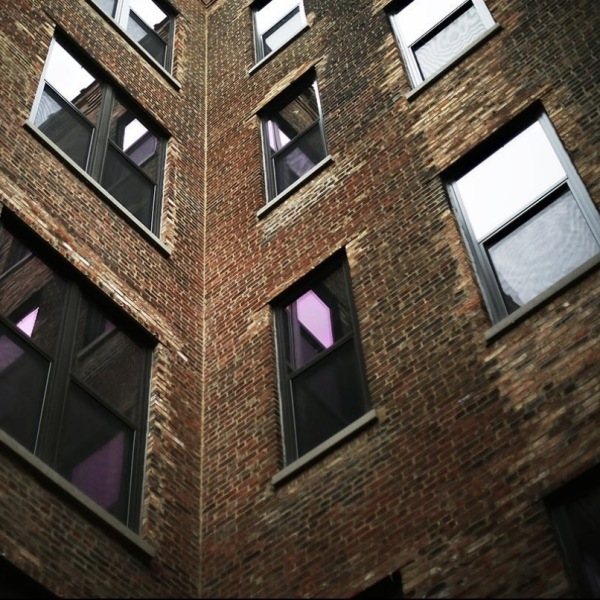
- Exposed Brick: A nod to the building's history that adds warmth and texture.
- Concrete Flooring: Durable, easy to clean, and perfect for high-traffic work areas.
- Mezzanine Levels: Utilizing the height of the unit to create a "loft within a loft," often used as a sleeping area to keep the main floor dedicated to work.
For a deeper look at why verticality matters, see this guide on Lofts with High Ceilings.
Architectural Elements of Live Work Lofts
In many premium developments, ten-foot ceilings are the standard, though some converted industrial spaces reach heights of 20 feet or more. Innovative designs now include retractable windows or floor-to-ceiling glass that blurs the line between indoors and outdoors.
Functionality is further enhanced by dual entrances. Some units offer a street-level or "sidewalk-accessible" door for clients and a separate residential entrance through the building lobby. This allows for a professional "storefront" feel without compromising the privacy of the living quarters.
Sustainability and Wellness in Design
Modern loft living isn't just about style; it's about health. Research from the Harvard T.H. Chan School of Public Health has shown that green building features, such as improved indoor air quality and better temperature regulation, contribute to higher cognitive function and mental well-being.
Many new projects are "Net Zero Energy ready," utilizing all-electric systems to reduce environmental impact. Large windows are more than an aesthetic choice—they provide abundant natural light, which is proven to boost mood and productivity. Smart home technology is often integrated to manage lighting and climate, ensuring the space remains comfortable whether in a deep-work session or hosting a dinner party.
Strategic Benefits for Professionals and Creatives
The most immediate benefit of Live work lofts is the drastic reduction in commuting. When the commute is measured in seconds rather than minutes or hours, a significant portion of the day is reclaimed. This extra time can be reinvested into business, hobbies, or rest, fostering a healthier work-life balance.
Furthermore, these spaces help project a professional image. Meeting a client in a stunning, high-ceilinged loft with industrial character is far more impressive than meeting in a cramped coffee shop or a generic spare bedroom. For those in the arts, the Artist Loft Chicago Ultimate Guide explores how these environments specifically support creative output.
Professional Advantages of Live Work Lofts
Beyond the lifestyle perks, there are practical business advantages:
- Dedicated Zoning: Many residential leases explicitly ban running a business. Live-work units provide the legal peace of mind that professional activities are fully authorized.
- Signage Opportunities: Some developments allow for approved business signage on the exterior, increasing visibility and foot traffic for retail-oriented residents.
Fostering Creative Ecosystems
Neighborhoods like Pilsen in Chicago have become hubs for this lifestyle because they offer a "creative ecosystem." Living in a building full of like-minded professionals—producers, designers, and entrepreneurs—prevents the isolation often associated with remote work. Shared resources, such as coworking lounges, rooftop decks, and fitness centers, provide natural networking opportunities and collaborative environments. Cultural engagement is built into the fabric of the neighborhood, with local galleries and murals providing constant inspiration.
Navigating Zoning and Neighborhood Selection
Choosing the right location for Live work lofts requires more than just looking at floor plans. It is necessary to understand the "vibe" of the neighborhood and the legal constraints of the building. In Chicago, neighborhoods like the West Loop and Pilsen offer distinct versions of the loft lifestyle. While the West Loop is known for its high-energy tech scene, Pilsen offers a deep connection to arts, culture, and community heritage. Learn more about the local landscape in this guide to Lofts in Pilsen Chicago.
Understanding Legal Requirements
Before committing to a space, it is essential to verify the municipal regulations. A true live-work unit must comply with specific building codes that address both residential safety and commercial utility.
- Commercial Proportion: Some zones require a specific percentage of the square footage to be dedicated to work.
- Environmental Assessments: Especially in older industrial buildings, it is important to ensure the site has been cleared of any residual chemicals from its manufacturing past.
- Financing: Purchasing a live-work loft can be more complex than a standard home. While residential mortgages apply to some, others may require mixed-use or even SBA loans if the commercial component is significant.
Top Urban Hubs for Loft Living
To help visualize the difference, consider how a live-work environment compares to a traditional office or a standard apartment.
| Feature | Traditional Office | Standard Apartment | Live-Work Loft |
|---|---|---|---|
| Commute | 30-60+ Minutes | N/A | 0 Minutes |
| Ceiling Height | 8-9 Feet | 8-9 Feet | 10-20 Feet |
| Client Access | Professional Lobby | Limited/Private | Often Direct/Street Access |
| Zoning | Commercial Only | Residential Only | Mixed/Dual Use |
| Flexibility | Low (Cubicles) | Moderate | High (Open Concept) |
Frequently Asked Questions about Live Work Lofts
What is the legal definition of a live-work loft?
A live-work loft is a unit that is municipally zoned for both residential and commercial use. It serves as the occupant's principal residence but contains a workspace designated for business activities. This differs from "working from home," which is a residential activity that may be subject to home-occupation bylaws.
Who is best suited for a live-work environment?
These spaces are ideal for entrepreneurs, digital artists, producers, and small business owners who need a dedicated professional area. They are also excellent for remote workers who find that a standard "home office" doesn't provide enough separation between personal and professional lives.
What are the pet policies in modern loft developments?
Most modern loft developments recognize that pets are part of the family. At FLATS properties like The Otis, there is a two-pet limit per apartment. These communities often feature pet-friendly amenities, such as rooftop dog runs or proximity to local parks, ensuring an urban pet lifestyle is manageable and fun.
Conclusion
Mastering the art of modern loft design is about more than just aesthetics; it is about creating a life that is integrated, productive, and inspired. Developments like The Otis Apartments by FLATS embody this philosophy. Located in the heart of Chicago's Pilsen neighborhood, these one- to three-bedroom rentals offer the perfect blend of industrial heritage and contemporary luxury.
With amenities like a rooftop deck for networking and a state-of-the-art gym for wellness, residents can enjoy the best of urban living. Whether looking for commercial loft space for rent in Chicago or a unique residential sanctuary, the live-work model offers a path toward a more balanced and creative future.