

The Unique Appeal of Apartments with Lofts
Choosing apartments with lofts allows urban residents to experience open-concept living, soaring ceilings, and industrial character. These unique homes stand out from traditional rentals by maximizing vertical space and architectural history.
Here is a quick guide to what defines a true loft layout:
- Open Floor Plans: Minimal interior walls create a seamless flow between living, dining, and sleeping areas.
- High Ceilings: Vertical space typically ranges from 10 to 18 feet, making layouts feel incredibly spacious.
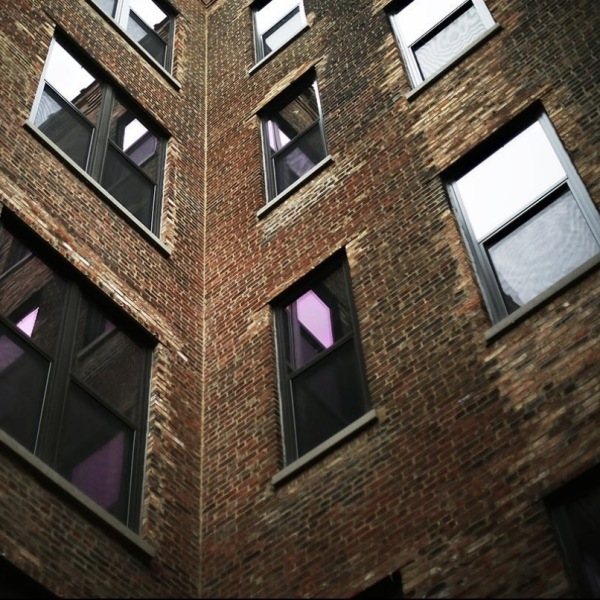
- Industrial Aesthetics: Original features like exposed brick, timber beams, concrete floors, and visible ductwork.
- Natural Light: Large, warehouse-style windows let in abundant daylight.
Historically, these residences began as converted factories and warehouses. Today, they represent a top option for young professionals who want a creative, flexible home close to public transit and cultural hubs.
Whether looking for a historic conversion with original character or a modern replica with updated amenities, knowing what to look for makes the search much easier.
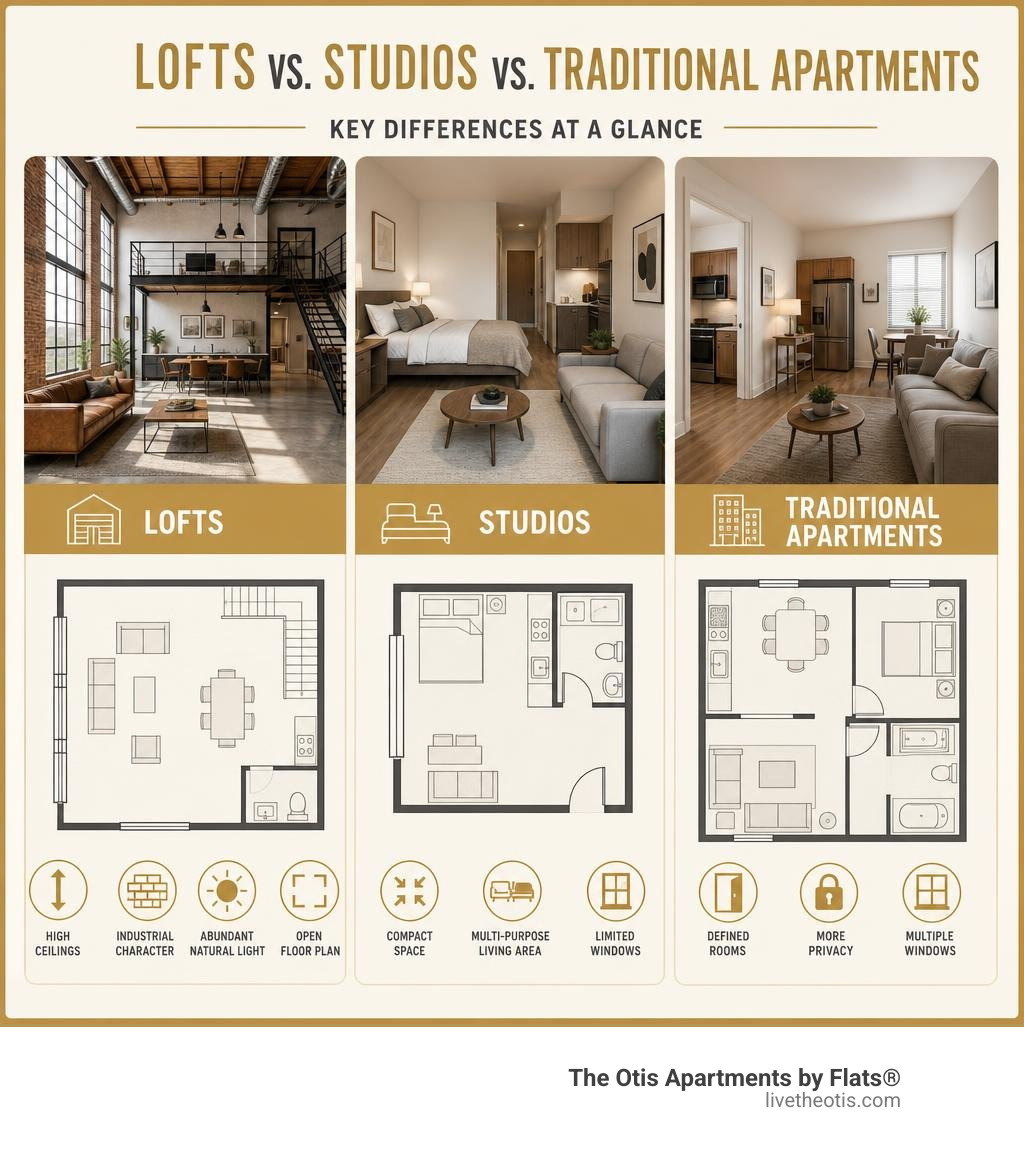
The visual below shows how these spaces compare to other common rental options.
The Evolution and Types of Loft Living
The concept of loft living has a rich history rooted in urban transformation. During the mid-20th century, manufacturing industries began relocating outside major city centers, leaving behind vast, empty industrial complexes. Artists and creatives recognized the potential of these vacant structures, utilizing them as flexible, light-filled spaces where they could both live and work. Over the decades, these gritty, functional workspaces evolved into highly sought-after residential properties.

The process of adaptive reuse has allowed cities to preserve historical architecture while meeting the demands of modern urban residents. Old textile mills, elevator factories, and printing presses have been retrofitted into residential communities. This preservation of history is a defining element of the industrial loft, offering an authentic living experience that cannot be replicated in standard contemporary construction. To explore how these historic buildings transitioned into modern residential homes, the ultimate warehouse lofts guide 2026 provides a comprehensive look at the movement.
Understanding the Architectural Appeal of Apartments with Lofts
The physical characteristics of an industrial building create a highly distinct aesthetic. Unlike traditional apartments that rely on drywalled partitions and uniform finishes, lofts celebrate structural honesty. Key architectural elements include:
- Exposed Brick: Original masonry walls add warmth, texture, and a sense of history to the interior.
- Timber Beams and Columns: Massive support pillars and heavy wooden ceilings highlight the craftsmanship of a bygone era.
- Concrete Ceilings and Floors: Polished concrete surfaces offer a sleek, minimalist foundation that is highly durable and easy to maintain.
- Oversized Windows: Large, multi-pane factory windows flood the deep interior spaces with natural light.
These features make lofts with high ceilings highly desirable for those who appreciate historic preservation and dramatic, vertical volume.
Hard Lofts vs. Soft Lofts
When searching for apartments with lofts, it is helpful to understand the distinction between "hard lofts" and "soft lofts."
Hard lofts are authentic adaptive reuse projects. They are located inside historic commercial or industrial buildings. These units feature original structural components, such as weathered brickwork, timber framing, and exposed mechanical systems. While they offer unparalleled historic character, they may sometimes lack modern climate control or standard apartment layouts.
Soft lofts, on the other hand, are newly constructed residential buildings designed to mimic the industrial aesthetic. They feature high ceilings, large windows, and open floor plans, but they are built with modern materials and construction techniques. Soft lofts typically offer superior sound insulation, updated HVAC systems, and uniform amenities, though they lack the genuine historical background of a converted factory.
The diagram below outlines the key differences between these two popular styles.

| Feature | Hard Lofts (Historic Conversions) | Soft Lofts (New Construction) |
|---|---|---|
| Origin | Refurbished factories, warehouses, mills | Purpose-built modern residential developments |
| Aesthetic | Authentic industrial grit, original brick, timber | Clean lines, modern finishes, industrial accents |
| Ceilings | Often 12 to 18 feet with exposed structural elements | Typically 10 to 12 feet, clean drywall or concrete |
| Acoustics | Can require extra rugs/insulation due to hard surfaces | Better modern soundproofing between units |
| Amenities | Often unique, historic structural layouts | Standard modern amenities (elevators, central air) |
5 Smart Ways to Find Your Ideal Loft Space
Finding the perfect loft requires a strategic approach. Because these properties are less common than standard apartments, renters should expand their search parameters and look beyond conventional apartment listings.

Using a targeted approach helps narrow down the choices to find a home that matches both aesthetic preferences and functional needs. The loft apartment rental guide 2026 offers excellent strategies for navigating the modern rental market.
1. Distinguish Between Hard and Soft Lofts Early
The first step in any search for apartments with lofts is deciding which style aligns with daily lifestyle needs.
If historic character, unique architectural quirks, and a connection to urban history are top priorities, a hard loft is the ideal choice. Renters should look for converted warehouses, print shops, or manufacturing facilities.
If modern building systems, updated kitchens, uniform layouts, and superior climate control are more appealing, a soft loft provides the industrial look without the challenges of older infrastructure. Identifying this preference early prevents wasted time during the apartment hunt.
2. Evaluate the Layout for Zoning Potential
The vast open space of a loft apartment can be both a benefit and a challenge. Without walls to define rooms, residents must use creative interior design to establish functional living zones.
When touring potential properties, renters should visualize how to arrange furniture to create distinct areas for sleeping, dining, lounging, and working.
- Use of Rugs: Placing large area rugs defines specific zones, such as a living room setup, without blocking sightlines.
- Double-Sided Bookcases: Tall, open shelving units can act as temporary room dividers while maintaining the airy feel of the space.
- Platform Beds: Utilizing vertical space with lofted furniture or platform sleeping areas helps separate the bedroom from the main living area.
3. Look for Flexible Layouts Suitable for Remote Work
For remote professionals and creative individuals, a loft offers the ultimate home office environment. The lack of rigid walls allows for highly customizable workspace setups.
Many modern properties are designed specifically as live work lofts, featuring open layouts that can easily accommodate desks, drafting tables, or studio equipment. When evaluating a unit for remote work, look for layouts that offer a quiet corner away from the main kitchen and living areas to minimize distractions during video calls.
4. Investigate Building-Specific Policies and Amenities
Because many loft buildings are converted from older industrial structures, building-specific policies and amenities can vary significantly.
Renters should pay close attention to pet policies. Many loft communities are highly welcoming to pets, but buildings typically enforce a strict two-pet limit per apartment. It is also important to check for on-site pet amenities, such as dog runs or washing stations.
Other critical building amenities to investigate include:
- Secure Package Delivery: Look for buildings equipped with smart package lockers to ensure secure, 24/7 access to deliveries.
- Parking Options: Inquire about on-site garage parking, surface lots, or neighborhood transit connectivity.
- Community Spaces: Rooftop decks, fitness centers, and resident lounges enhance the overall living experience.
5. Target Historic Industrial and Arts Districts
To find authentic hard lofts, focus the search on neighborhoods with a strong industrial heritage. In Chicago, areas like Pilsen, River West, Lincoln Park, and Lakeview are premier locations for finding high-quality loft properties.
Pilsen, located on Chicago's Lower West Side, is celebrated for its rich cultural history, vibrant arts scene, and historic industrial architecture. Converted manufacturing facilities in this district offer incredible spaces close to local galleries and public transit.
Searching for chicago warehouse lofts for rent in these specific historic neighborhoods yields the best results for authentic industrial living.
Smart Strategies for Finding Premium Apartments with Lofts
To secure a premium loft, renters should utilize advanced filters on search platforms and act quickly when new listings appear.
Using specific search terms like "exposed brick," "timber loft," or "warehouse conversion" helps bypass standard apartment layouts. For a direct look at available premium properties, browsing curated lists of loft apartments for rent can streamline the process.
Key Considerations When Touring Apartments with Lofts
During an in-person or virtual tour, look beyond the initial visual appeal and evaluate the practical aspects of the space:
- Natural Light: Observe the direction of the windows. Large windows provide excellent daylight, but South- or West-facing windows may require high-quality window treatments to manage heat gain during summer afternoons.
- Heating and Cooling Efficiency: High ceilings create a dramatic look, but they also require robust HVAC systems to maintain comfortable temperatures. Ask about the heating and cooling systems, and check for features like programmable smart thermostats.
- Acoustic Privacy: In historic timber or concrete buildings, check the thickness of the walls and ceilings. Polished concrete and hardwood floors can transmit sound, so look for properties that have incorporated modern sound dampening between units.
Frequently Asked Questions About Loft Living
What is the main difference between a loft and a studio apartment?
While both styles feature open-concept layouts, lofts are characterized by much larger vertical volume, higher ceilings (often 10 to 18 feet), and historic industrial features like exposed brick or concrete. Studio apartments are typically smaller, have standard ceiling heights, and are located in conventional modern residential buildings.
How do pet policies typically work in loft buildings?
Many loft buildings are pet-friendly, though standard policies typically restrict occupancy to a maximum of two pets per apartment. Some buildings may also require pet registration and third-party screening to ensure a comfortable environment for all residents.
What should remote workers look for in a loft layout?
Remote workers should look for layouts with distinct alcoves or vertical platform spaces that can serve as dedicated home offices. High-speed fiber internet capability, abundant natural light, and proximity to shared building co-working spaces are also highly beneficial.
Conclusion
Living in apartments with lofts offers a unique opportunity to combine historic architectural character with modern urban convenience. By understanding the differences between hard and soft lofts, evaluating layouts for functional zoning, and targeting historic arts districts, renters can find a space that perfectly complements their lifestyle.
For those looking to experience the ideal blend of style, culture, and modern amenities in Chicago, exploring river west loft apartments or properties in the vibrant Pilsen neighborhood is a fantastic place to start. The Otis Apartments by FLATS® provides exceptional modern rentals that celebrate local culture and urban living.