

What Is River West Chicago? A Quick Neighborhood Overview
River West Chicago is a compact, vibrant neighborhood tucked just west of the Chicago River and east of the Kennedy Expressway (I-90/I-94), bounded roughly by Chicago Avenue to the north and Grand Avenue to the south.
Here's what makes River West stand out at a glance:
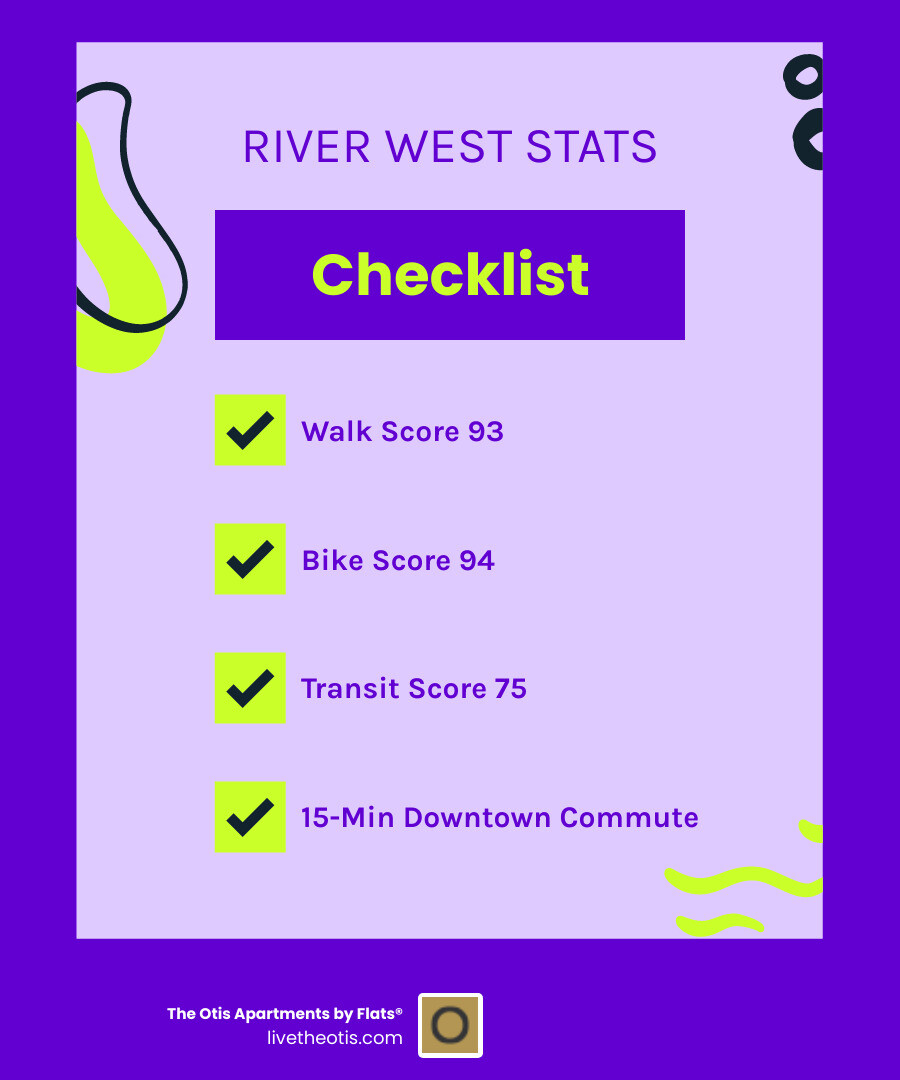
| Feature | Details |
|---|---|
| Location | West of Chicago River, east of Kennedy Expressway |
| Vibe | Urban, quiet, professional — a "hidden gem" |
| Population | ~3,400 residents; median age 34 |
| Walk Score | 93 — Walker's Paradise |
| Bike Score | 94 — Biker's Paradise |
| Transit Score | 75 — Excellent Transit |
| Downtown commute | ~15 minutes |
| Housing mix | Converted lofts, modern condos, high-rise rentals |
For years, River West flew under the radar — a mostly industrial zone sandwiched between flashier neighbors like River North and the West Loop. But that's exactly what makes it interesting now.
The neighborhood has been quietly transforming since the 1980s, when developers started converting abandoned warehouses and factories into residential lofts. Today, it attracts young professionals who want downtown-level access without downtown-level chaos — a rare combination in Chicago.
One longtime resident described it simply: "Super quiet neighborhood tucked into the middle of Chicago, easy access to everything but still quiet and secluded. Very unique for Chicago."
That balance — central yet calm, urban yet approachable — is the defining quality of River West.
The Evolution of River West Chicago

The story of river west chicago is one of industrial grit turning into urban grace. Originally, this area was a hub for manufacturing and transport, defined by its proximity to the Chicago River and rail lines. In the late 19th and early 20th centuries, the landscape was dominated by lumber yards, piano factories, and shoe manufacturers. One of the most famous landmarks of this era was the J.P. Smith Shoe Co. factory, a massive structure that once churned out footwear for the nation and now stands as a testament to the area's architectural heritage.
The mid-20th century brought significant change with the construction of the Kennedy Expressway in 1960. While the highway provided essential connectivity, it also physically carved the neighborhood out from its neighbors, leading to a period where the area felt somewhat isolated. For decades, it was often viewed as a "fly-over zone" between the Loop and the trendier North Side.
However, the 1980s sparked a massive revitalization. Developers recognized the potential in the sturdy, abandoned warehouses and began converting them into residential lofts and creative office spaces. This shift laid the groundwork for the modern River West Neighborhood.
A major driver of this growth was the River West Tax Increment Financing (TIF) district. Designated in 2001, this 124-acre district was established to foster redevelopment, fund public works, and rehabilitate existing structures. Key projects supported by this initiative included improvements to the CTA Blue Line Grand Avenue station and the support of local staples like the Blommer Chocolate Company. While the TIF district is set to expire in 2025, its impact on the neighborhood’s infrastructure and residential appeal remains a cornerstone of the area's success. For a deeper dive into these origins, you can read about Exploring the History of River West Chicago - Reside Living.
Residential Landscape and Housing Styles
Living in river west chicago offers a distinct residential experience characterized by a blend of history and modernity. The neighborhood is home to approximately 3,442 residents, with a median age of 34, creating a demographic that leans toward young professionals and urban enthusiasts. The household composition is diverse, though it is notably a renter-heavy market, with about 58.8% of residents occupying rental units.
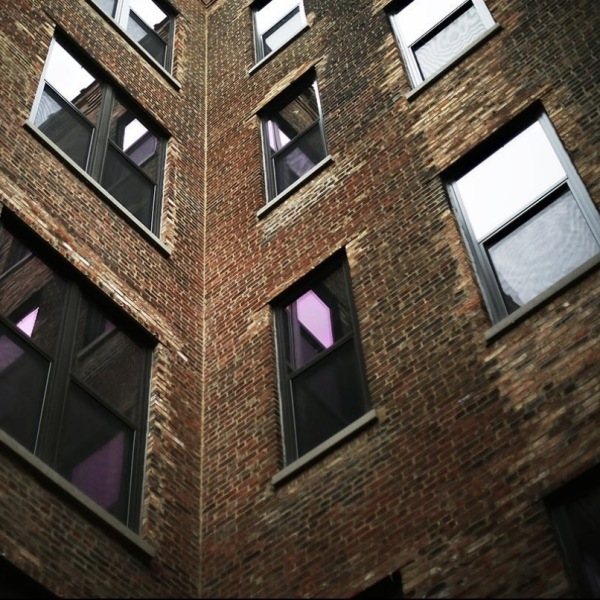
The housing stock is a visual timeline of the neighborhood's evolution. You will find everything from century-old brick buildings to sleek, glass-wrapped high-rises. Many residents are drawn to the area for its "blank slate" feel—it is a dynamic neighborhood that offers a quieter alternative to the high-intensity energy of the nearby West Loop.
For those looking to move into the area, the River West Chicago Apartments Guide 2026 highlights the variety of options available, from intimate mid-rise buildings to expansive luxury complexes. Most modern residences in the area accommodate pet owners, typically allowing a two-pet limit per household, making it a welcoming environment for those with furry companions. You can explore current listings through River West Rentals Chicago.
Modern Lofts in River West Chicago
The quintessential River West home is the timber loft. These spaces, often found in repurposed factories like the former J.P. Smith Shoe Co., feature high ceilings, exposed brick walls, and massive timber beams. These industrial elements are frequently paired with luxury finishes, such as gourmet kitchens and spa-like bathrooms, creating a "chic-industrial" aesthetic that is highly sought after.
Beyond the historic lofts, the skyline is increasingly dotted with modern high-rise and mid-rise developments. These buildings offer a different set of perks, including floor-to-ceiling windows with unobstructed views of the Chicago skyline, rooftop pools, and state-of-the-art fitness centers. Whether you are searching for expansive three-bedroom units or Studio Apartments River West, the housing market here provides a sophisticated urban backdrop for any lifestyle.
Dining, Arts, and Cultural Attractions
While River West is smaller than some of its neighbors, it punches well above its weight class when it comes to culture and dining. The neighborhood is known for an "understated vibrance"—it doesn't shout for attention, but those who know where to look find some of the city's best gems.
Foodies often flock to the intersection of Grand and Halsted, where iconic spots like Piccolo Sogno offer legendary al fresco dining. For a more modern, New American experience, The Dawson provides a massive patio and a sophisticated cocktail program. The area's culinary scene is diverse, featuring everything from high-end Italian to hidden basement sushi bars like Noriko, located beneath Perilla Fare. For the latest on the local food scene, River West | Eater Chicago is an essential resource.
Culturally, the neighborhood is home to unique institutions like Intuit: The Center for Intuitive and Outsider Art, a world-class museum dedicated to artists who operate outside the traditional mainstream. For those seeking relaxation, AIRE Ancient Baths provides a luxury spa experience housed within a restored 19th-century factory, featuring thermal baths and massage services that feel worlds away from the city streets.
The neighborhood also serves as a premier destination for events. Galleria Marchetti is a celebrated venue for weddings and formal gatherings, known for its beautiful courtyards and elegant indoor spaces. Whether you are looking for a quiet coffee at Big Shoulders Coffee or a night of cocktails at The Dandy Crown, the River West Complete Guide shows that there is always something to discover.
Connectivity and Transportation Infrastructure
One of River West's most significant "superpowers" is its location. It sits at the nexus of five major roads—Milwaukee, Ogden, Chicago, Grand, and Halsted—giving residents unparalleled access to the rest of the city.
The neighborhood's transportation scores reflect its convenience:
- Walk Score: 93 (Walker’s Paradise)
- Transit Score: 75 (Excellent Transit)
- Bike Score: 94 (Biker’s Paradise)
Milwaukee Avenue, famously known as the "Hipster Highway," cuts directly through the heart of the neighborhood. This stretch features protected bike lanes and serves as a major artery for cyclists commuting into the Loop or heading northwest toward Wicker Park and Logan Square.
For those who drive, the Kennedy Expressway (I-90/I-94) is immediately accessible, providing a direct route to both the northern and southern suburbs, as well as easy connections to the Dan Ryan and Eisenhower Expressways.
Commuting from River West Chicago
The CTA Blue Line is the lifeblood of the neighborhood’s public transit. With stations at both Grand Avenue and Chicago Avenue, residents can reach the Loop in about 10 to 15 minutes. This line also provides a direct, one-seat ride to O'Hare International Airport, making it an ideal location for frequent travelers.
In addition to the rail, several major bus routes serve the area, including the #56 Milwaukee, #66 Chicago, and #8 Halsted. These routes provide easy east-west and north-south connections, ensuring that even without a car, the entire city is within reach. For more details on navigating the area, see our River West Complete Guide.
Frequently Asked Questions
What are the boundaries of River West?
While definitions can vary slightly between locals and city maps, the neighborhood is generally bounded by Chicago Avenue to the north, the Chicago River to the east, and the Kennedy Expressway (I-90/I-94) to the west and south. Some residents consider Grand Avenue or Hubbard Street to be the more natural southern boundary.
Is River West a walkable neighborhood?
Yes, with a Walk Score of 93, it is considered a "Walker's Paradise." Most daily errands, including trips to local cafes, bars, and small grocers, can be accomplished on foot. While major supermarkets are slightly further away in the West Loop, many residents utilize grocery delivery services or make the short trip to nearby Mariano's or Whole Foods.
What is the history of the area?
River West began as a heavy industrial and manufacturing hub in the late 1800s. After a period of decline following the construction of the Kennedy Expressway, it saw a residential resurgence in the 1980s. This era was defined by the conversion of old factories and warehouses into the loft apartments that now define the neighborhood's aesthetic.
Conclusion
The future of river west chicago looks exceptionally bright. While it has maintained a "hidden gem" status for years, major developments are set to further integrate it into the fabric of downtown. The Tribune Master Plan is one of the most anticipated projects, promising to transform the riverfront with new residential towers, retail spaces, and public parkland. Additionally, projects like 700 West Chicago are bringing even more modern infrastructure to the neighborhood's edges.
As the neighborhood continues to grow, it maintains its unique identity as a quiet, professional enclave that offers immediate access to the best of Chicago. If you are looking for a place that balances historic charm with modern luxury, this neighborhood is an excellent choice.
For those who appreciate the FLATS® lifestyle and want to explore more of what Chicago has to offer, The Otis Apartments in the nearby Pilsen neighborhood provides another fantastic option for modern urban living. To learn more about living in this area, you can Discover River West Lofts or explore our other communities across the city.