

What Defines Contemporary Design?
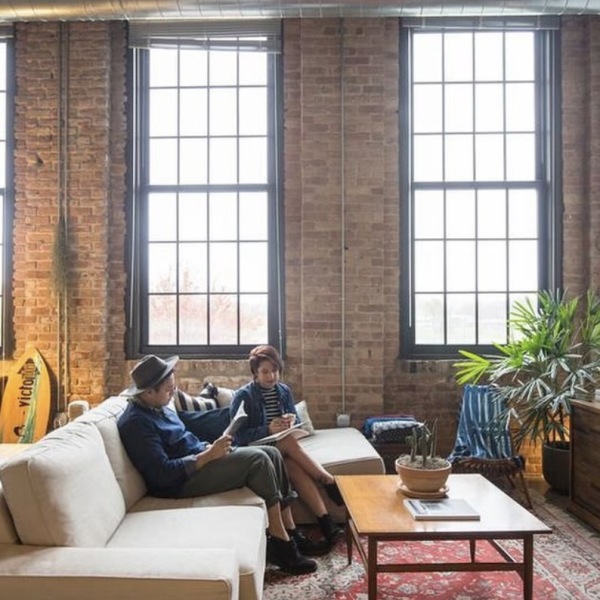
Contemporary living spaces represent the design trends and aesthetics of right now—a fluid, changing style that reflects how people want to live today. Unlike styles tied to a specific historical period, contemporary design adapts and changes with the times, making it both timeless and current.
What makes a living space contemporary?
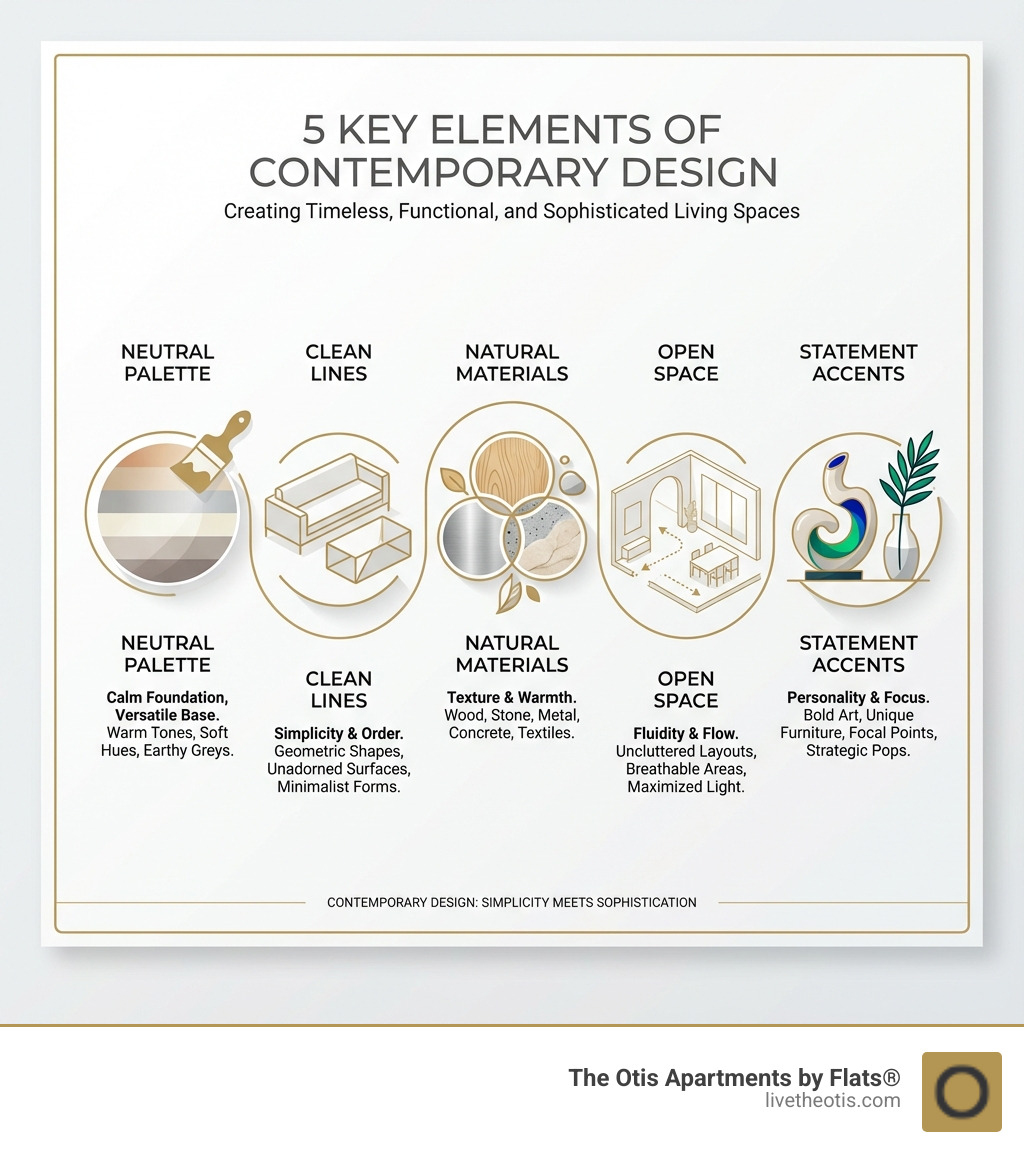
- Clean lines and uncluttered layouts that maximize space and flow
- Neutral color palettes with strategic pops of color through art or accents
- Natural materials like wood, stone, metal, and concrete
- Open, functional floor plans that blur the lines between living areas
- Statement pieces that add personality without overwhelming the space
- Smart integration of form and function in every element
Contemporary design prioritizes simplicity without sacrificing sophistication. The goal is to create spaces that feel open, breathable, and purposeful—where every piece of furniture and every design choice serves a clear function while contributing to the overall aesthetic.
The beauty of this approach lies in its flexibility. Contemporary living spaces can incorporate curved furniture for softer appeal, bold artwork for visual interest, or industrial elements for urban edge. The style accepts what's current in interior design, from biophilic elements that bring nature indoors to sustainable materials that reflect modern values.
As one designer notes, contemporary spaces "find beauty in practicality while using rich materials to soften the minimalism." This balance between function and warmth separates truly inviting contemporary spaces from those that feel sterile or cold.
Contemporary vs. Modern: Clearing Up the Confusion
When we talk about contemporary living spaces, it's easy to confuse the term with "modern design." While they share some similarities and influences, they are distinct stylistic movements. Understanding the differences is key to truly appreciating and implementing contemporary aesthetics in your home.
Modern design refers to a specific period in history, typically the early to mid-20th century (roughly 1920s-1970s). It emerged from a rejection of ornate, traditional styles and acceptd principles like clean lines, functionality, and a focus on natural materials such as wood, glass, and metal. Think of the Bauhaus movement or Mid-Century Modern furniture—these are iconic examples of modern design. Modernism, as a movement, is fixed in time; its characteristics are well-defined and don't change. It often favors a warmer, more subdued color palette.
Contemporary design, on the other hand, is literally "of the moment." It refers to what is popular and trending in interior design right now. This means it's constantly evolving, influenced by current trends, technology, and global perspectives. While it draws inspiration from modernism and minimalism, it isn't bound by them. Contemporary design can incorporate curvier furnishings, more striking hues, and a broader range of materials and influences. It's fluid, adapting to what's new and fresh.
Both styles champion clean lines and uncluttered spaces, emphasizing form and function over excessive embellishment. They both aim for simplicity and a sense of openness. However, the key distinction lies in their temporal nature: modern is a historical style, while contemporary is dynamic and ever-changing.
Let's break down the key differences:
| Aspect | Modern Design | Contemporary Design |
|---|---|---|
| Time Period | Early to mid-20th century (fixed) | What is popular now (changing) |
| Color Palette | Warmer, more subdued, earthy tones | Often starker, more striking, can be bold or neutral |
| Lines/Shapes | Primarily crisp, straight lines, geometric | Crisp lines and curvier, more organic shapes |
| Materials | Wood, glass, metal (often chrome or steel) | Wood, stone, cork, glass, metal, concrete, sustainable |
| Overall Feel | Timeless, specific historical aesthetic | Current, adaptable, reflects present-day trends |
So, while a modern living room might evoke a specific retro-chic vibe, a contemporary living room is a reflection of today's aesthetic sensibilities, always ready to accept the next big thing. This makes contemporary living spaces incredibly versatile and exciting to design.
The Core Elements of Contemporary Living Spaces
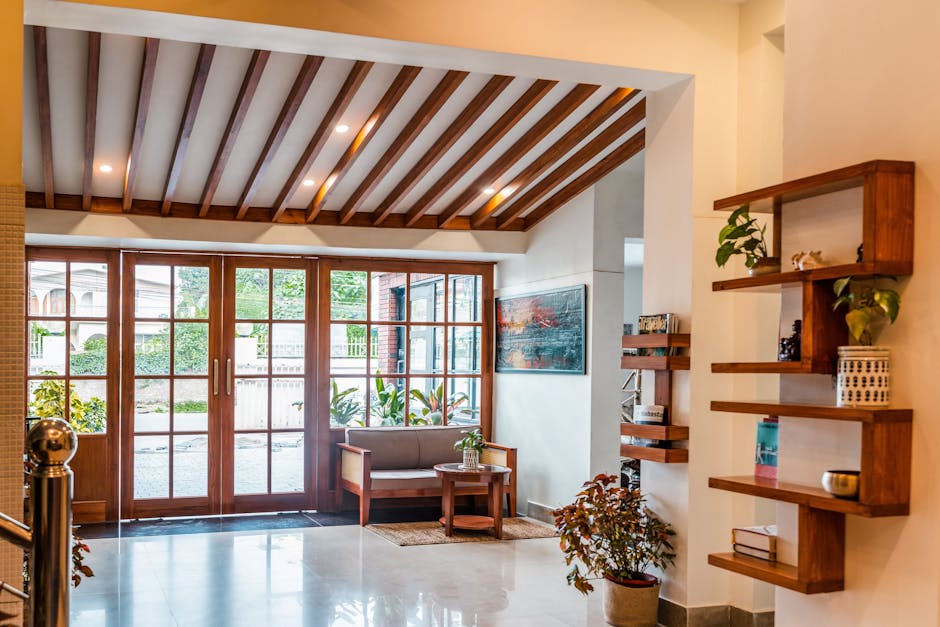
Building a truly captivating contemporary living space involves understanding its foundational elements. It's about creating a cohesive aesthetic that feels fresh, functional, and inviting. The focus is on key components that allow for crafting spaces that are both stylish and practical for urban living.
Essential Furniture: Form, Function, and Flow
In contemporary living spaces, furniture is more than just seating; it's a statement of design and purpose. Priority is given to pieces that boast sleek silhouettes, clean lines, and an emphasis on functionality. Low-profile sofas and sectionals often serve as the anchor, providing ample seating without overwhelming the room. These pieces are typically upholstered in neutral fabrics, allowing other elements to introduce color or texture.
Statement armchairs can add a touch of personality and provide additional, comfortable seating. Think of iconic shapes that offer visual intrigue, such as those that blend comfort with a visually stunning organic silhouette. Minimalist media consoles keep entertainment systems tidy and unobtrusive, maintaining the uncluttered aesthetic.
A current trend in contemporary furniture is the incorporation of curvier furnishings and organic shapes. This can be seen in sofas with soft edges, round coffee tables, or lounge chairs with fluid lines. These elements soften the crispness often associated with modern design, adding a welcoming touch without sacrificing sophistication. For instance, a curved sofa can neatly hug natural bow windows, bringing an updated feel to a space.
Furniture in contemporary design should blend sophistication with functionality. It's about selecting pieces that are beautiful to look at and comfortable to use, creating a flow that encourages conversation and relaxation. A well-placed armchair, for example, can transform a living space, adding extra seating and sophistication when positioned alongside a modern side table. For instance, as shown in designs by Nicole Hollis, a curved sofa and puff lounge chairs can create a sophisticated living space that's perfect for both meditation and entertaining.
Materials and Textures: Crafting a Tactile Experience
The tactile experience of a contemporary living space is just as important as its visual appeal. Materials and textures are carefully selected to create depth, warmth, and a connection to the natural world. Natural materials are a hallmark of this style. Commonly used materials include:
- Wood: From light oak floorboards to rich wood finishes on credenzas and side tables, wood brings warmth and an organic touch.
- Stone: Marble, concrete, and other stone slabs are used for fireplace surrounds, coffee tables, or accent walls, adding a luxurious and grounded feel.
- Metal: Polished chrome, brushed steel, gold, silver, and copper accents appear in furniture frames, lighting fixtures, and decorative objects, providing sleekness and a touch of glamour.
- Cork: This sustainable material can introduce a unique texture and natural element.
Layering textures is key to preventing contemporary spaces from feeling sterile. Pairing a plush area rug with a sleek leather sofa, or bouclé armchairs with linen throw pillows creates visual interest and a sense of inviting comfort. For instance, a wool and silk layer in a rug can lend a homey feel, softening an industrial-leaning living room.
Biophilic design, which emphasizes connecting occupants with the natural environment, is a strong influence. This often means incorporating sustainable materials and maximizing natural light through large windows. Studies have shown that green building practices, which often include the use of sustainable materials, contribute to healthier, more comfortable living spaces, improving indoor air quality and even mental well-being. This focus on natural elements creates harmony with the environment, even in urban settings.

Color Palette: From Neutral Foundations to Bold Statements
The color palette in contemporary living spaces typically begins with a neutral base. White, gray, beige, and black form the foundation, creating a calm, expansive, and sophisticated backdrop. These monochromatic schemes make spaces appear larger and more open, which is particularly beneficial in urban apartments. White walls, for example, can make a room feel light and airy, while gray or beige provide a softer canvas.
While neutrals dominate the larger surfaces, contemporary design thrives on strategic pops of bold color. This is where personality shines through. Vibrant hues can be introduced through:
- Statement art: A large, colorful piece of modern art can act as a focal point, injecting energy and individuality.
- Accent pillows and throws: These are easy ways to introduce color and pattern that can be changed with the seasons or evolving tastes.
- Curtains: Floor-to-ceiling sheer curtains in a subtle color can soften large windows while adding a hint of warmth.
- Furniture: A single, colorful couch can provide a striking contrast against a neutral backdrop.
Earth tones, such as deep greens, muted blues, and terracotta, have also made a comeback, often paired with chrome or black accents for a contemporary twist. These colors can be used on accent walls, in upholstery, or through decorative elements to create a more grounded and inviting atmosphere. The key is balance: allowing the neutral foundation to maintain a sense of calm, while carefully chosen colors provide visual interest and energy.
Mastering Space: Layout, Lighting, and Personality
In contemporary living spaces, the design focuses on creating environments that are not only beautiful but also highly functional and reflective of individual lifestyles. This means paying close attention to how space is used, how light interacts with the interior, and how personal touches can lift the aesthetic beyond mere trends.
Strategic Layouts and Furniture Arrangement
Open-concept living is a defining characteristic of many contemporary homes, especially in urban settings like Chicago's Pilsen, Lincoln Park, River West, and Lakeview neighborhoods. These layouts foster a sense of spaciousness and connectivity, allowing natural light to flow freely. However, open spaces require thoughtful planning to avoid feeling cavernous or undefined.
A common approach involves creating distinct zones within an open floor plan. This can be achieved through:
- Furniture grouping: Arranging sofas and chairs to form intimate conversation areas, perhaps anchored by a large area rug, effectively delineates a living zone from a dining or kitchen area.
- Focal points: A prominent feature is often used as a central anchor for the layout. This could be a sleek fireplace, a large window showcasing stunning city views, or a captivating piece of statement art.
- Vertical space: In lofts with high ceilings, like those found in many of Chicago's industrial-chic buildings, verticality is exploited with tall shelving units, dramatic pendant lights, or floor-to-ceiling curtains to draw the eye upward and improve the sense of grandeur.
When arranging furniture, prioritizing flow and functionality is paramount. Ensuring clear pathways and creating configurations that encourage interaction are key. In spaces designed for both relaxation and entertaining, versatile pieces that can be easily reconfigured or serve multiple purposes are a strong consideration. For instance, a large sectional can provide ample seating, while nesting tables offer flexible surface areas that can be tucked away when not in use.
The Role of Lighting in Contemporary Living Spaces
Lighting is a critical element in crafting the ambiance and functionality of contemporary living spaces. The aim is to maximize natural light wherever possible, which is why many contemporary designs feature large windows, often left bare or softened with simple sheer curtains. This allows an abundance of daylight to flood the interior, enhancing the sense of openness and connecting the indoors with the vibrant urban environment outside.
Beyond natural light, a layered lighting strategy is employed to create depth and cater to various activities:
- Ambient lighting: This provides overall illumination, often achieved through recessed lighting, track lighting, or large, diffused ceiling fixtures.
- Task lighting: Essential for reading or working, task lighting includes floor lamps next to a reading chair, or integrated LED lighting under shelves.
- Accent lighting: Used to highlight architectural features, artwork, or decorative objects, adding drama and visual interest.
Statement lighting fixtures also play a significant role. Sculptural pendants over a dining area, modern chandeliers in a living room, or an neat arc floor lamp beside a sofa can serve as artistic focal points, adding character and sophistication. Integrated LED lighting, which is sleek and streamlined, can also be used to create a contemporary feel, especially when highlighting shelves or built-in features. The right lighting can transform a space, making it feel warm and inviting or sleek and dramatic, depending on the desired mood.
Injecting Personality into Contemporary Living Spaces
The misconception that contemporary living spaces must be sterile or devoid of personality is easily debunked. While the style accepts clean lines and minimalism, it also offers a fantastic framework for personal expression. The goal is to create spaces that feel curated, comfortable, and uniquely yours, moving far beyond a cold, austere aesthetic.
Injecting personality through thoughtful curation rather than clutter is encouraged. This can include:
- Curated art and personal photography: Instead of generic decor, displaying pieces that resonate with the resident—whether it's a bold abstract painting, a collection of unique prints, or framed personal photographs—is a key strategy. These elements can serve as powerful focal points and conversation starters.
- Sculpture and unique vintage pieces: A sculptural object, whether a ceramic vase or a striking metal piece, can add an artistic touch. Blending a few carefully chosen vintage finds with contemporary furniture can create a rich, layered look that tells a story and adds character. This "old meets new" approach prevents a space from feeling too uniform.
- Greenery: Incorporating indoor plants, from large potted palms to smaller succulents, brings life, color, and a touch of biophilic design into the space. They soften hard edges and contribute to a healthier indoor environment.
- Textiles: Thoughtful use of throw pillows, blankets, and rugs in varying textures and subtle patterns can add warmth and comfort, inviting residents and guests to relax.
The key is to select items that are genuinely loved and that reflect personal tastes, ensuring they integrate harmoniously with the overall contemporary aesthetic. This approach allows for crafting contemporary living spaces that are not just beautiful, but also deeply personal and welcoming.
Adapting the Style for Different Homes
One of the great strengths of contemporary design is its adaptability. Whether you're working with a compact city apartment or an expansive industrial loft, the principles of contemporary living spaces can be custom to create a stunning and functional home.
Designing for Smaller Areas and Lofts
In smaller areas, such as studios or compact one-bedroom apartments in Chicago, creating an illusion of space is paramount. Contemporary design's emphasis on clean lines and uncluttered environments naturally lends itself to this challenge. Several strategies can be used to make smaller contemporary living spaces feel larger and more open:
- Light color palettes: Predominantly white, light gray, or beige walls and furniture reflect light, making the room feel brighter and more expansive.
- Mirrors: Strategically placed large mirrors can dramatically amplify light and create the perception of greater depth and space. An oversized floor mirror leaned against a wall can double views and brighten a room.
- Multi-functional furniture: Pieces that serve more than one purpose are essential for maximizing space. Storage ottomans can provide seating, a footrest, and hidden storage. Nesting tables offer flexible surface areas that can be expanded for guests and tucked away for daily living. Clear acrylic or glass furniture, such as coffee tables, can also make a room feel less cluttered because they don't visually block space.
- Streamlined designs: Choosing furniture with slender legs and open bases rather than bulky, floor-length pieces helps maintain visual lightness and prevents a small room from feeling weighed down.
Even in artist lofts, where space might be generous but layout can be tricky, these principles help maintain a sense of order and sophisticated design.
Embracing the Open-Concept and Industrial Loft
Chicago is renowned for its industrial heritage, leading to many stunning loft conversions in neighborhoods like Pilsen, River West, and the West Loop. These spaces often feature exposed brick, concrete floors, and soaring ceilings—elements that can be beautifully integrated into contemporary living spaces.
For open-concept layouts and industrial lofts, the challenge often lies in defining functional areas without erecting physical barriers. This can be achieved by:
- Defining zones with rugs: Large area rugs can visually anchor a seating arrangement, clearly distinguishing the living area from other open zones like a dining space or home office.
- Furniture grouping: Arranging furniture to create distinct "rooms" within the larger open space. For example, a large sectional sofa can create a cozy living room nook, while a console table behind it can define the boundary.
- Balancing industrial elements with soft textures: The raw, edgy appeal of exposed brick and concrete floors is characteristic of industrial lofts. To prevent these spaces from feeling cold or harsh, softness is introduced through plush textiles—velvet sofas, bouclé chairs, sheepskin throws, and heavy drapes. This contrast creates a rich, inviting, and cohesive aesthetic.
- Strategic lighting: Leveraging the high ceilings of lofts, dramatic pendant lights or clusters of contemporary fixtures are used to define areas and add visual interest, drawing the eye upwards.
In Pilsen, for example, modern apartments often blend industrial-chic aesthetics with contemporary luxury, honoring the neighborhood's cultural identity while offering cutting-edge amenities. This approach ensures that even with features like exposed brick and concrete, the living spaces feel warm, inviting, and distinctly contemporary.
Frequently Asked Questions about Contemporary Design
Questions often arise about how to best implement contemporary design principles in a way that feels personal and practical. Here are some of the most common queries about creating contemporary living spaces:
How do I make a contemporary living room feel cozy and not cold?
The fear of a sterile or cold contemporary space is common, but easily overcome! The key is to balance the clean lines and minimalist tendencies with elements that introduce warmth and comfort. Here’s how to do it:
- Layered Textures: This is perhaps the most effective strategy. Pair sleek furniture with plush rugs, soft throw blankets (like wool, faux fur, or bouclé), and inviting cushions in linen or velvet. These tactile elements immediately soften the space.
- Warm Lighting: While natural light is paramount, thoughtful artificial lighting creates ambiance. Use dimmable lights, table lamps with warm-toned bulbs, and accent lighting to create pools of light rather than harsh overhead glare. Sculptural floor lamps or shaded pendants can add a cozy glow.
- Natural Materials: Introduce wood, stone, and cork. A live edge coffee table, a wooden credenza, or even a natural fiber basket can bring organic warmth.
- Pops of Warm Color: While the base palette might be neutral, strategically placed accents in earthy tones like terracotta, deep green, or warm rust can add a welcoming touch without overwhelming the minimalist feel.
- Greenery: Indoor plants add life and a natural, calming element. Large potted plants or smaller arrangements can make a significant difference.
- Personal Touches: Curated artwork, unique vintage finds, and cherished decorative objects inject personality and history, making the space feel lived-in and loved rather than just "designed."
Can I mix contemporary design with other styles?
Absolutely! One of the most exciting aspects of contemporary design is its flexibility and ability to blend with other styles. In fact, mixing elements from different eras and aesthetics is a current trend that creates truly unique and personalized contemporary living spaces.
- Contemporary + Mid-Century Modern: This is a popular pairing. The clean lines and functional forms of Mid-Century Modern furniture (like an Eames lounge chair or a Saarinen Womb Chair) integrate seamlessly with contemporary aesthetics, adding a touch of retro sophistication.
- Contemporary + Industrial: This blend is particularly popular in urban lofts. Exposed brick, concrete floors, and metal accents from industrial design can be softened and refined with sleek contemporary furniture, plush textiles, and modern art.
- Contemporary + Traditional: For those who appreciate classic elements, pairing traditional architectural features (like ornate fireplaces or crown molding) with streamlined contemporary furniture and neutral palettes creates an neat, transitional look.
- Contemporary + Japandi: This fusion of Japanese and Scandinavian aesthetics emphasizes minimalism, natural materials, and a serene atmosphere, fitting perfectly within contemporary sensibilities.
The key to successful mixing is balance. Choose a dominant style (often contemporary) and introduce elements from another style in a thoughtful, curated manner. Look for commonalities like clean lines or natural materials to create a harmonious blend rather than a chaotic clash.
What is the biggest mistake to avoid in contemporary design?
The biggest mistake to avoid when creating contemporary living spaces is allowing the desire for minimalism and clean lines to result in a sterile, impersonal, or impractical environment. While contemporary design champions simplicity, it should never sacrifice comfort, personality, or functionality.
- Lack of Personality: A space that looks like a showroom rather than a home. Without personal touches, art, or unique items, a contemporary space can feel generic and cold.
- Poor Functionality: Over-prioritizing aesthetics to the detriment of how you actually live. If a beautiful sofa is uncomfortable, or there's no convenient place for a drink, the design fails.
- Ignoring Comfort: Sleek doesn't have to mean hard or unwelcoming. Forgetting to incorporate soft textures, warm lighting, and inviting seating can make a room feel unapproachable.
- Excessive Clutter (or too little storage): While contemporary design values uncluttered spaces, real life has "stuff." Failing to incorporate clever, hidden storage solutions can lead to a constant battle against clutter, undermining the minimalist aesthetic.
- Monotony: Relying too heavily on a single neutral tone without any textural variety or subtle pops of color can make a space feel flat and uninteresting.
The goal is to create a living space that feels current, sophisticated, and reflective of your lifestyle—a place where practicality and aesthetics coexist beautifully.
Conclusion: Your Space, Reimagined
Contemporary living spaces are a dynamic reflection of today's aesthetic, offering a harmonious blend of clean lines, natural materials, and functional design. This article has explored how this style gracefully distinguishes itself from its modern predecessor, embracing fluidity and current trends while maintaining a timeless appeal. From the essential furniture that defines a room's flow to the careful selection of materials, textures, and colors that craft its ambiance, every element plays a crucial role.
It has also been shown how lighting and strategic layouts can transform a space, maximizing natural light and creating distinct zones for living, working, and relaxing. Most importantly, it has been emphasized that contemporary design is far from sterile; it's a canvas for personal expression, where curated art, unique vintage finds, and lush greenery inject warmth and individuality.
Whether adapting to smaller urban apartments or embracing the expansive character of industrial lofts in Chicago's vibrant neighborhoods, contemporary principles offer versatile solutions. The key lies in balancing practicality with aesthetics, ensuring that your home is not just visually stunning but also incredibly comfortable and functional.
The principles of contemporary design are evident in thoughtfully designed urban residences, such as The Otis Apartments, which blend modern amenities with stylish interiors. Find how these principles come to life by exploring the Floorplans.