

What Makes Art Lofts a Unique Urban Living Experience
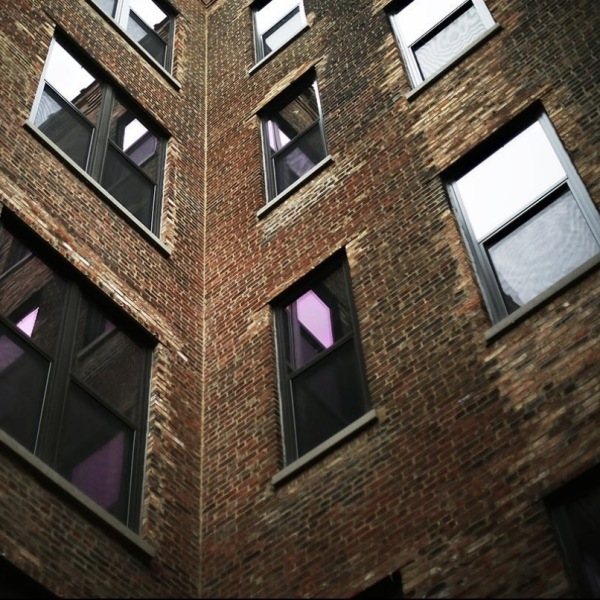
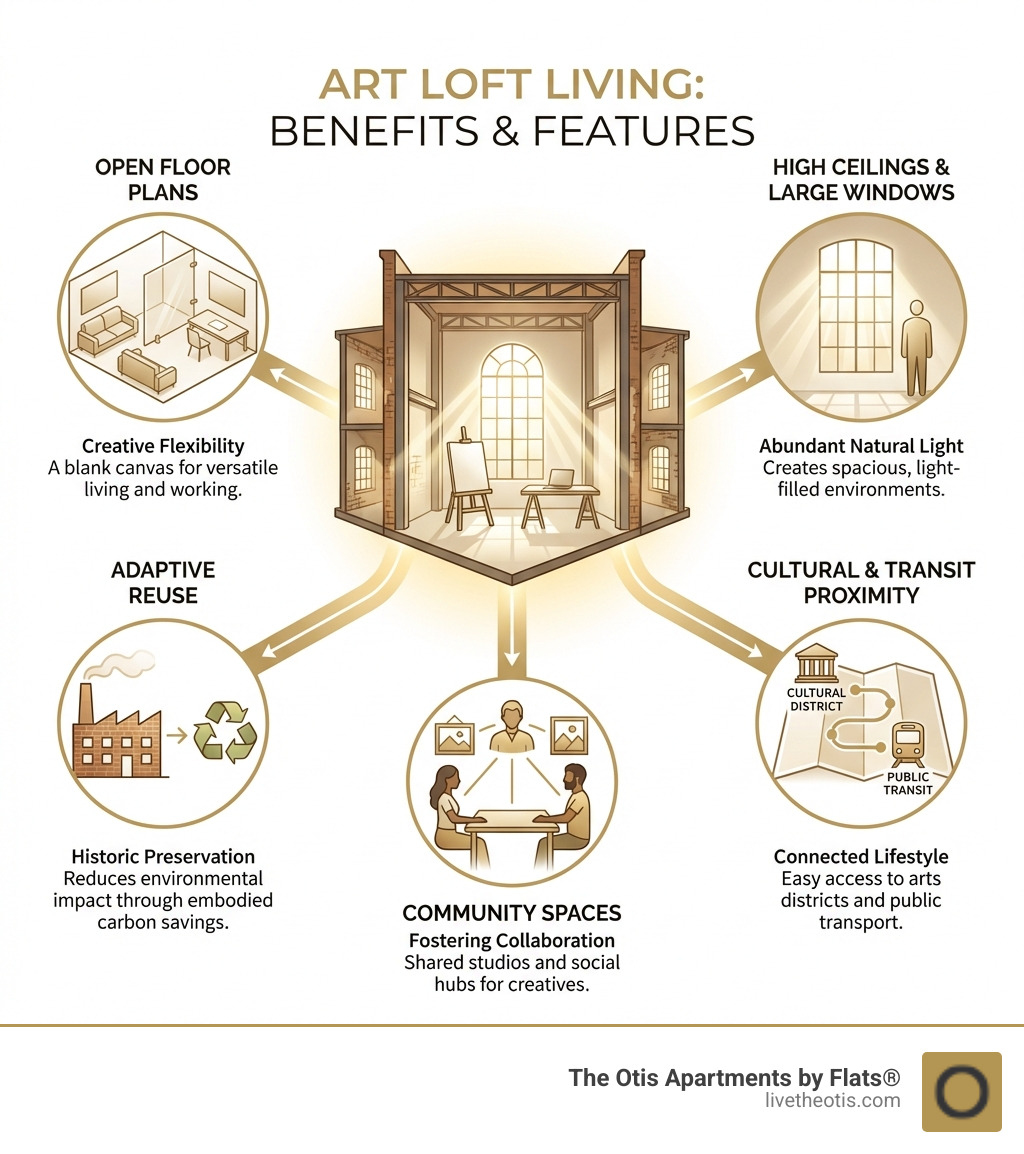
Art lofts are live-work residential spaces, typically converted from historic industrial or commercial buildings, featuring open floor plans, high ceilings (12-16 feet), large windows for natural light, and raw architectural elements like exposed brick and concrete floors.
Key Features of Art Lofts:
- Spacious layouts: Units range from 1,200 to 2,100 square feet with open-concept designs
- Industrial character: Exposed brick, timber beams, concrete floors, and oversized windows
- Creative amenities: Janitor sinks, extra-wide doors for large artwork, and dedicated work areas
- Community spaces: Shared studios, resident galleries, and collaborative workspaces
- Adaptive reuse: Converted factories and warehouses that preserve historic architecture
Art lofts blend the boundaries between living and working. They started as spaces where artists transformed old warehouses into studios, integrating residential and creative environments. Today, these developments serve creatives and anyone who values open, light-filled spaces with character.
The concept has evolved from informal artist collectives into purpose-built communities. Modern art loft buildings maintain the industrial aesthetic while adding contemporary amenities like fitness centers, rooftop decks, and community gathering spaces.
Successful adaptive reuse projects demonstrate how these developments revitalize neighborhoods. For example, converting a mid-century office building can prevent the emission of over 8,030 tonnes of embodied carbon—equal to planting 132,770 trees.
In Chicago, neighborhoods like Pilsen have become hubs for this lifestyle, where former industrial buildings now house thriving creative communities near galleries, cultural attractions, and transit lines.
Defining the Modern Art Loft Experience
Entering a modern art loft is a departure from the standard apartment experience. These spaces are defined by their volume and versatility. Unlike traditional apartments that use walls to dictate how a space should be used, a Loft Apartment offers a blank canvas. This flexibility is essential for those who need room to think, create, and move without the constraints of a standard floor plan.

The architectural heritage of these buildings is usually front and center. Many are the result of an industrial conversion, where former factories or warehouses are meticulously renovated to meet residential standards while keeping their "hard loft" soul. This often means residents enjoy soaring ceilings that can reach up to 16 feet and massive windows that flood the interior with natural light—a must-have for visual work and a significant mood booster for any urban dweller. For a deep dive into the specifics of these layouts, the Artist Loft Chicago Ultimate Guide provides an excellent overview of what to expect in the local market.
Specialized Amenities in Art Lofts
What truly separates art lofts from standard luxury rentals are the functional details. These buildings are designed with the practical needs of creators in mind. It is common to find specialized features that you simply won't see in a traditional high-rise:
- Janitor Sinks: Deep, heavy-duty sinks located within the unit or in shared work areas, perfect for cleaning brushes, tools, or handling materials that would ruin a standard kitchen basin.
- Extra-Wide Doors: Hallways and entryways are often wider than average to accommodate the movement of large-scale canvases, sculptures, or equipment.
- Concrete Floors: Beyond the aesthetic appeal, sealed concrete floors are prized for their durability and ease of cleanup. They can withstand heavy equipment and accidental spills that would destroy hardwood or carpet.
- Natural Light: High-performance windows are prioritized to ensure that the "living artwork" of the city skyline is visible, while providing the consistent light levels required for detailed work.
Community Spaces in Art Lofts
The "art" in art lofts refers to more than just the individual units; it describes the ecosystem of the building. These developments often include shared facilities that encourage collaboration and public engagement. Resident galleries are a staple, providing a professional space for people to exhibit their work and host opening nights without leaving the building.
Shared studios and work-tech labs are also common, offering access to specialized tools or technology that require significant space or professional-grade infrastructure. These shared resources turn a residential building into a creative hub, fostering a community of support that is rare in typical urban housing.
Comparing Notable Art Loft Features
When searching for the perfect creative space, the details matter. The following table highlights common architectural and community features found in premier developments across the country, focusing on the elements that define the art loft lifestyle.
| Feature | Standard Loft | Premium Art Loft |
|---|---|---|
| Unit Size | 600 – 1,000 sq. ft. | 1,200 – 2,100 sq. ft. |
| Ceiling Height | 9 – 10 feet | 12 – 16 feet |
| Flooring | Hardwood or Laminate | Polished Concrete or Original Timber |
| Architectural Details | Drywall, modern finishes | Exposed brick, timber beams, ductwork |
| Windows | Standard residential | Oversized industrial-style |
| Shared Creative Space | Resident Lounge | Shared Studio, Gallery, Tech Lab |
| Outdoor Amenities | Small balcony | Rooftop deck with city views |
| Fitness | Standard gym | Modern fitness center & wellness rooms |
These features work together to create an environment that supports both productivity and relaxation. The presence of exposed brick and timber beams provides a sense of history and warmth, while modern additions like rooftop decks and fitness centers ensure that the living experience is as comfortable as it is inspiring.
Sustainability and Adaptive Reuse in Creative Spaces
One of the most compelling aspects of art lofts is their inherent sustainability. Most of these projects are examples of adaptive reuse—the process of repurposing an existing building for a use other than which it was originally designed.
By choosing to renovate a historic factory or warehouse instead of demolishing it, developers significantly reduce the "embodied carbon" associated with new construction. Embodied carbon is the CO2 emitted during the manufacture, transport, and assembly of building materials. As noted in the research, preserving an existing structure can be equivalent to planting hundreds of thousands of trees.
Furthermore, an Industrial Loft often benefits from the thick, durable walls of historic masonry, which can provide excellent natural insulation and sound dampening. Modern retrofitting adds energy-efficient windows and HVAC systems, blending 19th-century craftsmanship with 21st-century environmental standards.
Finding Your Creative Community in Chicago
Chicago has a long history of industrial innovation, and today, that history provides the foundation for some of the most vibrant art lofts in the country. The Pilsen neighborhood stands out as the epicenter of this movement. Known for its rich cultural heritage and colorful murals, Pilsen offers a unique blend of grit and beauty that attracts people from all over the city.
Living in a Loft Apartment in this area means being steps away from the Chicago Arts District. Events like 2nd Fridays Gallery Night allow residents to walk from their front door into a neighborhood-wide celebration of creativity. For those looking for an Artist Loft for Rent Chicago, the proximity to local galleries and the National Museum of Mexican Art makes it an ideal location.
If you are exploring Loft Rentals in Chicago, you will find that Lofts in Pilsen Chicago offer a distinct sense of place. The neighborhood's walkable streets are filled with independent coffee shops, historic architecture, and a community spirit that is hard to find in more commercialized parts of the city.
Frequently Asked Questions about Creative Lofts
What architectural features define these spaces?
Authentic art lofts are characterized by their raw, industrial bones. Look for soaring ceilings (often 12 feet or higher), which create a sense of grandeur and allow for vertical storage or large-scale installations. Exposed brick and original timber beams are common, providing a tactile connection to the building's history. Oversized windows are perhaps the most vital feature, offering the metropolitan panoramas and natural light that define the loft aesthetic. These elements are explored in detail in the guide to Lofts with High Ceilings.
How do these developments support local culture?
Developments that prioritize creative living often act as anchors for their neighborhoods. By providing space for gallery exhibitions and community programs, they foster an environment where local culture can thrive. Shared resources—like tech labs or communal workshops—encourage residents to collaborate rather than work in isolation. This ecosystem supports the broader arts community by keeping creative activity visible and accessible to the public.
What are the typical pet policies in these buildings?
Many Chicago Loft Rentals recognize that pets are part of the family. While policies vary by building, a standard approach in modern developments is a two-pet limit per apartment. The open floor plans and durable concrete floors of most art lofts make them particularly well-suited for pets. Additionally, the urban locations of these buildings often provide great walkability to nearby parks and pet-friendly businesses.
Conclusion
The Otis Apartments by FLATS® represents the pinnacle of modern creative living in Chicago. Located in the heart of the Pilsen neighborhood, these rentals offer a sophisticated blend of industrial heritage and contemporary luxury. Residents enjoy access to premium amenities, including a rooftop deck with stunning skyline views and a modern gym, all while being immersed in one of the city's most culturally vibrant districts.
Whether you are drawn to the high ceilings, the historic charm of exposed brick, or the energy of a neighborhood like Pilsen, art lofts offer a lifestyle that traditional apartments simply cannot match. For more information on finding the perfect space, explore the Artist Loft Chicago Ultimate Guide and discover the best of urban living.